• DE
  • Lösungen
    • Fire protection curtains

      Fire protection curtains

      Fire protection curtains are seal openings in walls and ceilings in case of fire. The constructional set-up (rolling- or folding technology) and the use of different fabrics offer a wide application spectrum as well as different protection targets or classifications and time classes. Casings and side guides of those flexible applicable systems are integrated almost invisibly in the building and provide much scope for design of sophisticated architecture for opened designs.

    • Conveyor system closures

      Conveyor system closures

      Manifold production - and logisitc processes require different construction types of conveying systems. If the haulage drifts are passing through fire-retarding resp. fire-resisting walls or ceilings, the necessary openings must be provided with fire protection closures to avoid the expansion of the fire by conveyor technique or by conveyed material. In case of fire the conveyor system closures have to seal those openings immediately and automatically. Thereby a classified fire resistance as well as the smoothly clearing of the closing area must be respected in case of release.

    • Smoke curtains

      Smoke curtains

      A smoke curtain is part of unit keeping areas free from smoke and may include building parts like natural smoke and heat venting systems and automatic smoke and heat venting systems. Smoke curtains restrict the movement of fire gases inside a building in case of fire.

    • Smoke protection closures

      Smoke protection closures

      In closed condition smoke protection closures restrict the passage of smoke in the phase of fire formation so as to enable the rescue of people, animals or materials assets in case of a fire in the room positioned behind it without the need of breathing protection.

    • Tube sealings

      Tube sealings

      The solution to problems with fire protection dampers for ventilation and air conditioning systems in conveying processes. Stöbich offers fire protection for pneumatic conveying lines where the closing elements are not exposed to the flow. Thus, damage or contamination of the closure element is avoided by abrasive conveyed goods.

    • Controls

      Controls

      Control systems are necessary for all automatic fire protection systems! They are safety-relevant, because without their function or in the event of a malfunction, the entire investment of a fire protection partition would be useless. Controllers coordinate both fire detection and the interaction with other controls, like superordinate building control or the retraction of the closing area at conveyor closing area.

    • Médiathèque Charles Nègre | Grasse, France

      Médiathèque Charles Nègre | Grasse, France

      The Médiathèque Charles Nègre in Grasse, France, is an impressive example of contemporary architecture that reflects the cultural and historical importance of the region. The information center with space for education, culture and encounters was opened in 2011 and designed by the renowned French architecture firm Marc Barani. The building combines modern aesthetics with the traditional architecture of Provence, creating a harmonious link between old and new, for example by combining modern materials such as glass and steel with local natural stone. The generous window fronts create an atmosphere flooded with light. Ecological sustainability is achieved through natural ventilation and the resulting reduction in energy consumption; green spaces are also integrated on various levels. Our <a href="/us/solutions/fire-protection-curtains/stoebich-fire-smoke-curtain-hc"><b>➥ horizontal Fire and smoke curtain hc</b></a> fire protection curtains fit perfectly into this marvel of contemporary architecture. They securely close the ceiling openings in the event of a fire, but otherwise remain invisible and let in plenty of light and air. Copyright attribution: © Ivry Serres

  • Referenzen
  • Themenwelten
  • Weltmarktführer
  • Nachhaltigkeit
  • News
  • Jobs
  • Kontakt
Kaiser-Friedrich-Forschungspreis

STÖBICH verleiht Kaiser-Friedrich-Forschungspreis in Hannover

STÖBICH verleiht Kaiser-Friedrich-Forschungspreis in Hannover

Alle zwei Jahre zeichnet STÖBICH innovative Forschungsprojekte im Bereich der Optischen Technologien aus. In diesem Jahr ging der Kaiser-Friedrich-Forschungspreis an das OPTIMUS-Team der Leibniz Universität Hannover für ausgezeichneten Umwelt- und Klimaschutz.

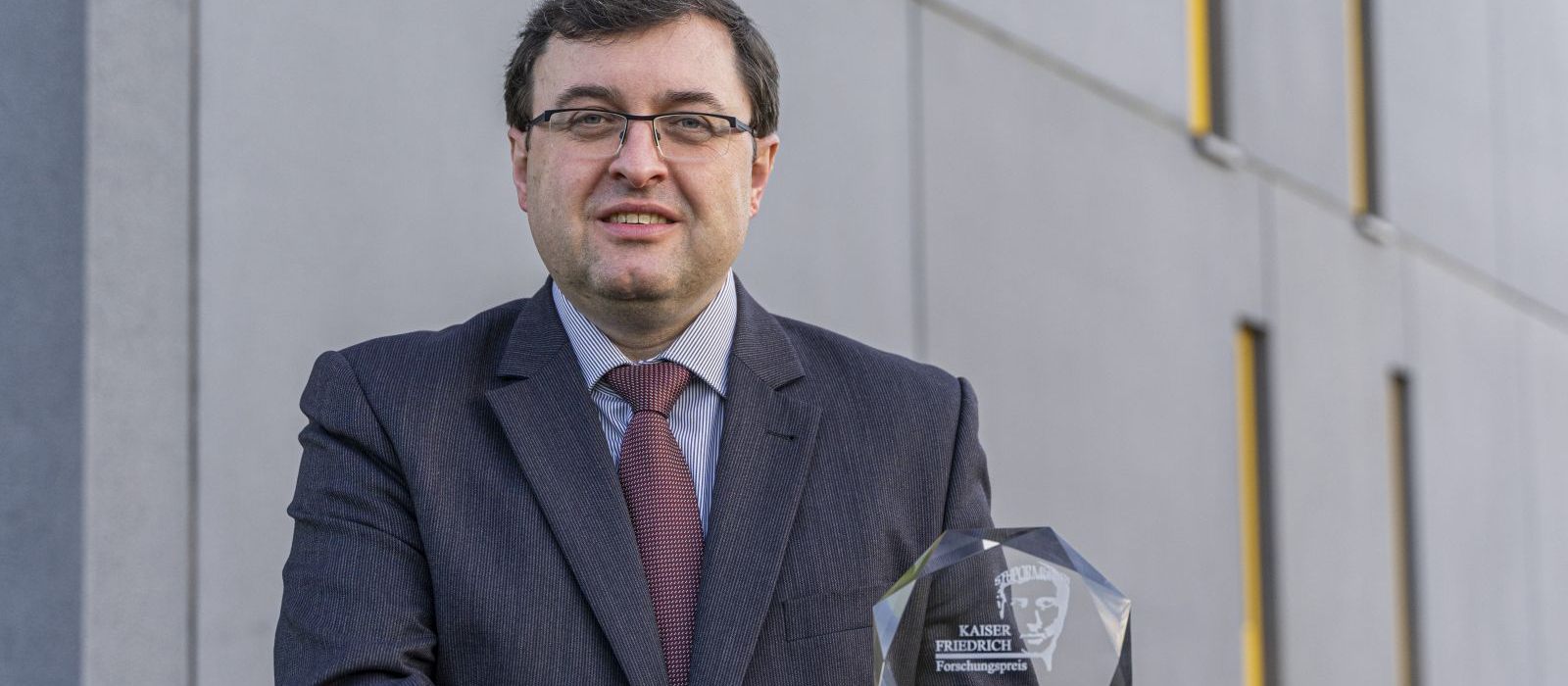
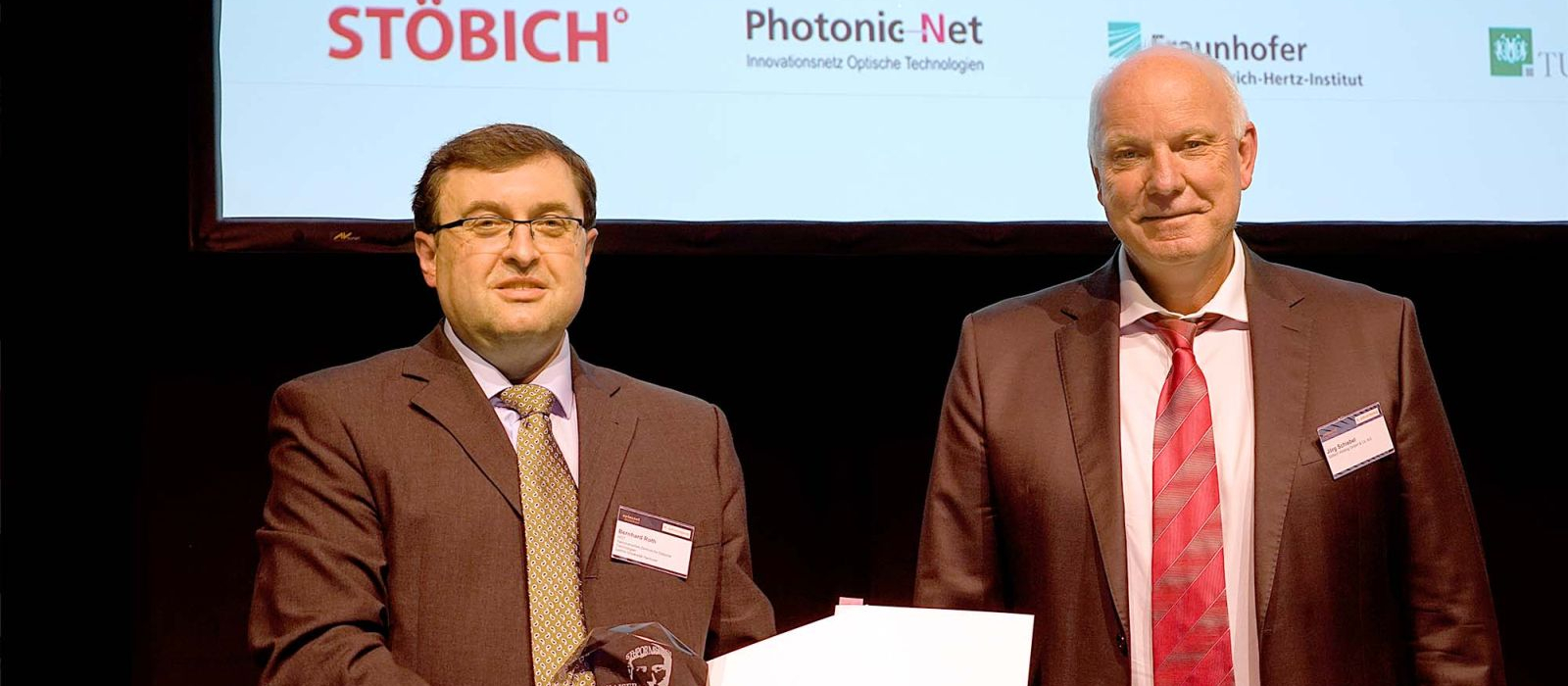
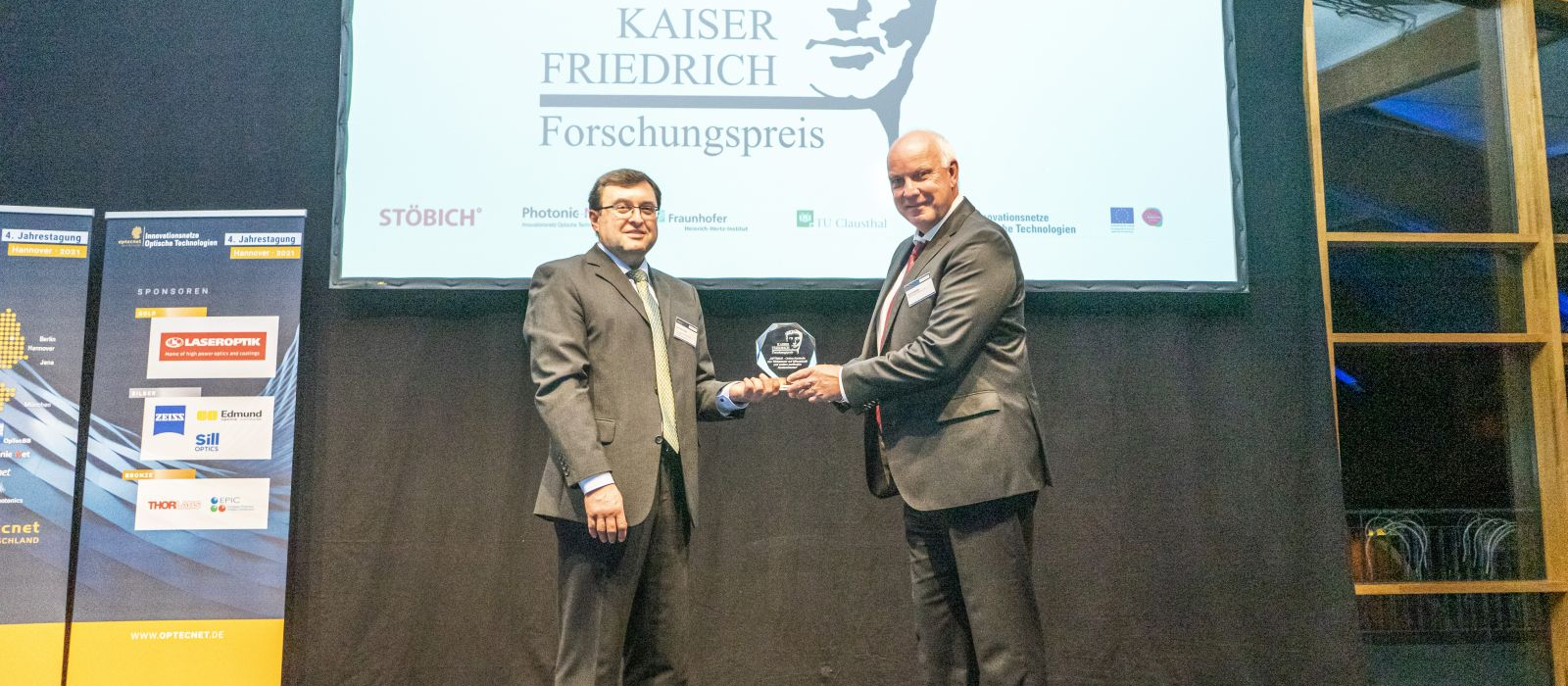
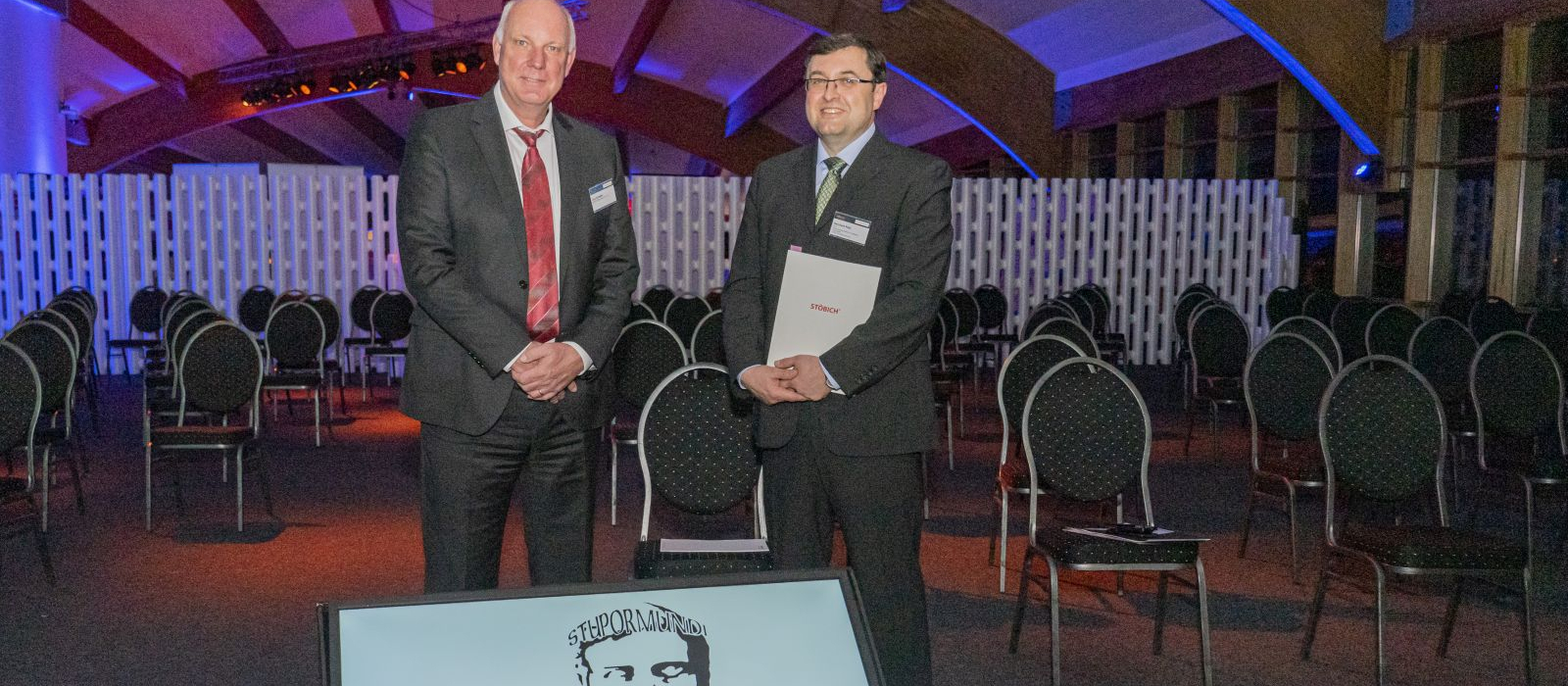
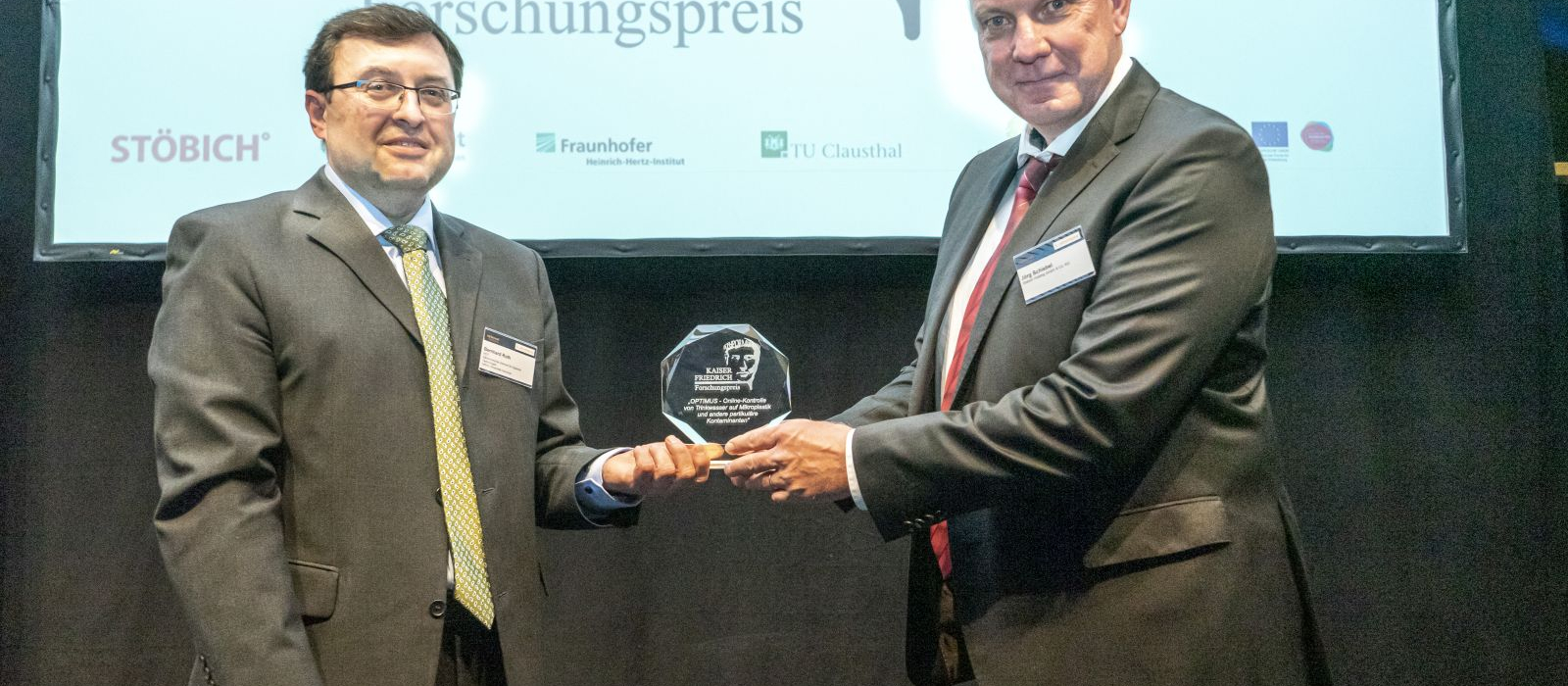
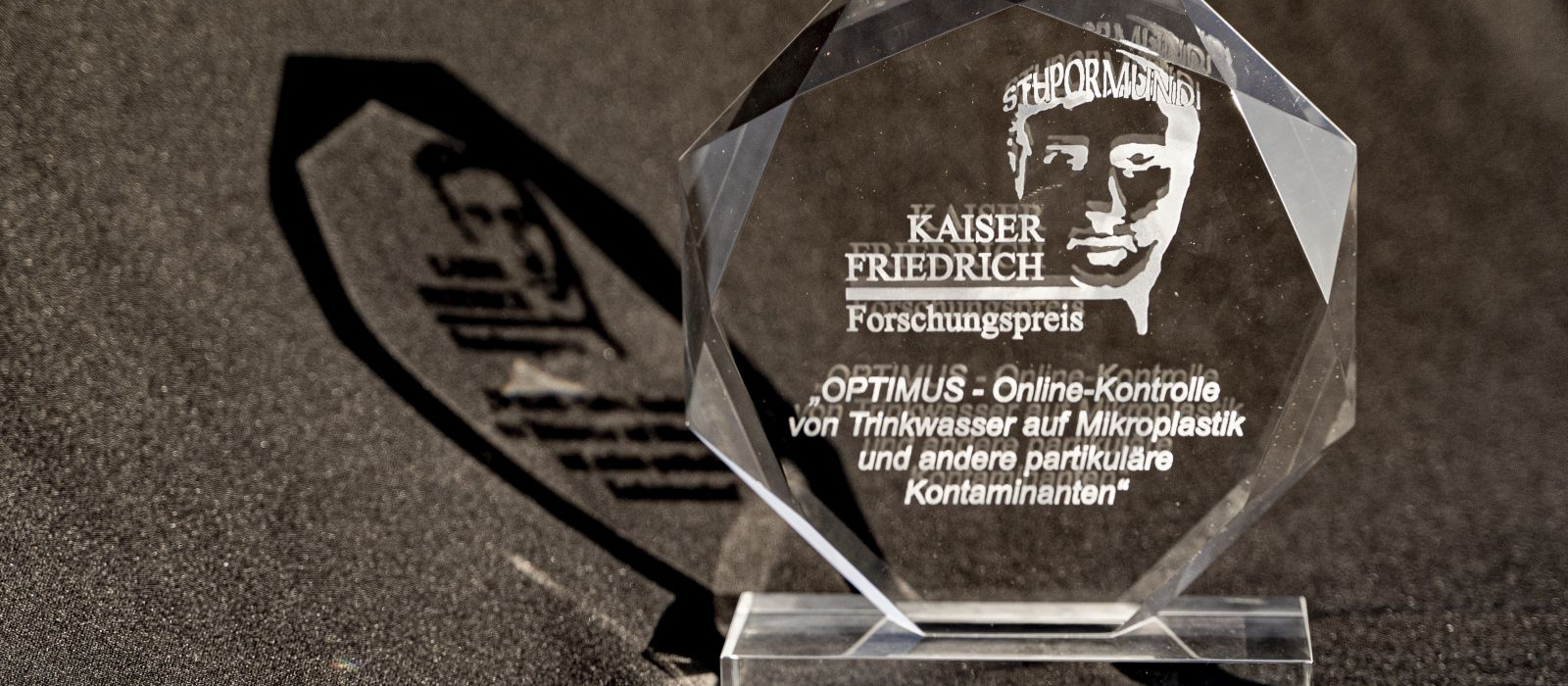
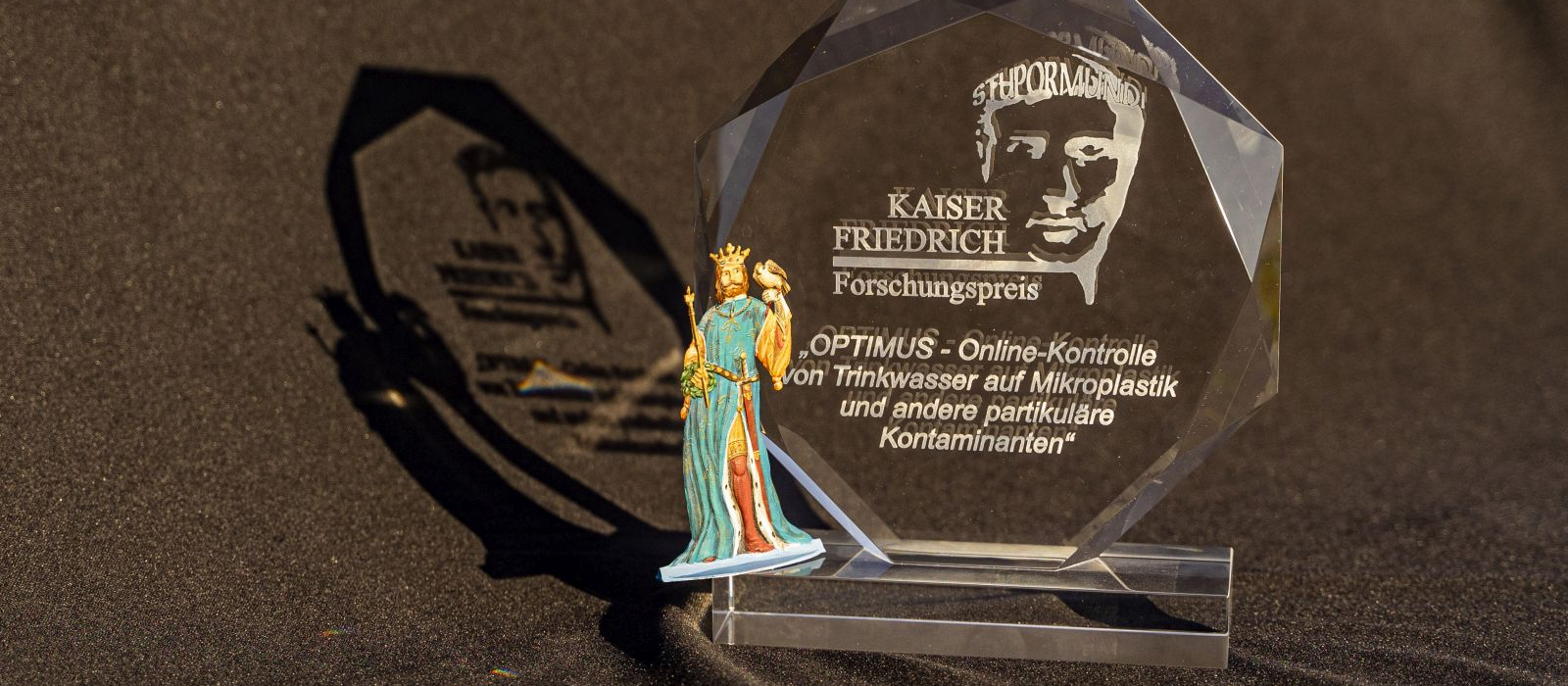
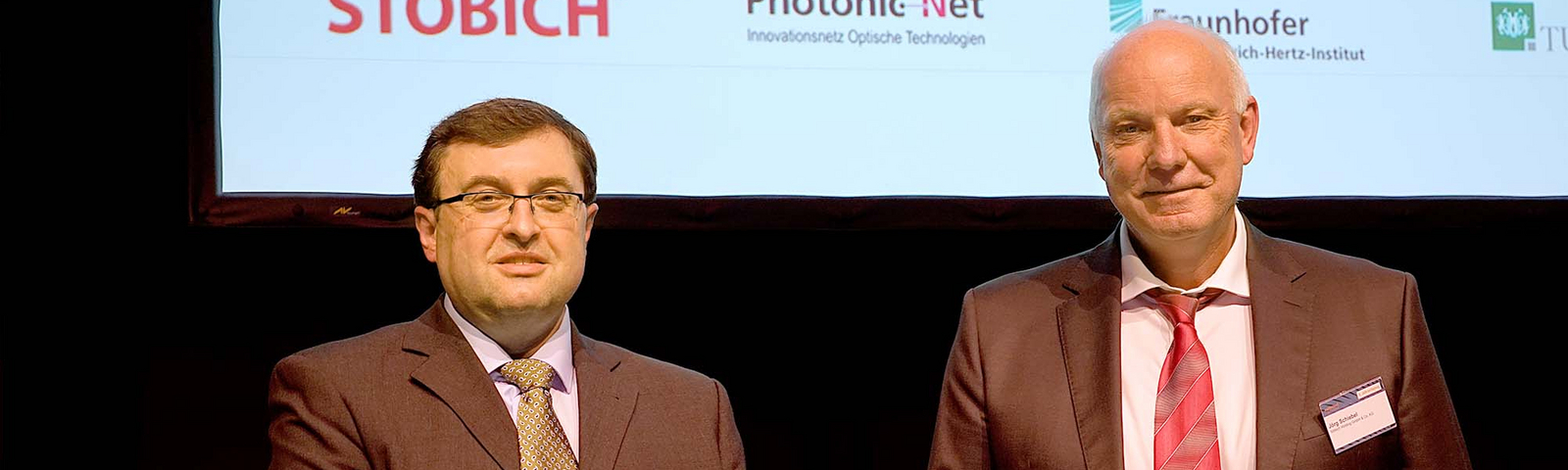
Mit sichtlichem Stolz nahm Prof. Bernhard Roth, Mitglied im Exzellenzcluster PhoenixD der Leibniz Universität Hannover, den mit 15.000 Euro dotierten Forschungspreis, auch im Namen seiner Kollegin Frau Dr. Ann-Kathrin Kniggendorf, die der Veranstaltung nicht beiwohnen konnte, entgegen. Die sonst traditionell in der Kaiserpfalz Goslar stattfindende Preisverleihung war bereits zweimal verschoben worden und fand nun im Rahmen der 4. OptecNet Jahrestagung im Expowal Hannover statt. Jörg Schiebel, CEO der STÖBICH Gruppe, überreichte die begehrte Trophäe am 24.11.2021 in feierlichem Ambiente: Der im Frühjahr verstorbene Firmengründer und Innovationstreiber Dr.-Ing. Jochen Stöbich hatte den Kaiser-Friedrich-Forschungspreis seinerzeit ins Leben gerufen.

Dass die Preisverleihung pandemiebedingt mit einem Jahr Verspätung erfolgen musste, schmälert nicht die herausragende Leistung der prämierten WissenschaftlerInnen. Das Team um Dr. Ann-Kathrin Kniggendorf und Prof. Bernhard Roth vom Hannoverschen Zentrum für Optische Technologien (HOT) hat eine Methode entwickelt, die Mikroplastik in Wasser mithilfe optischer Technologien aufspürt. Die teils mikroskopisch kleinen Kunststoffpartikel gelangen auf verschiedenen Wegen in die Umwelt, in unser Trinkwasser und unsere Nahrungsmittel und somit schließlich in unseren Körper. Die Detektion und Beseitigung dieser unerwünschten Teilchen hat somit auch gesellschaftlich eine hohe Priorität – und hier setzt das OPTIMUS-Projekt an, vom Bundesministerium für Bildung und Forschung gefördert:
Wo vorher komplizierte Proben nötig waren, bestimmt das mobil einsetzbare Mess-System mit Laserlicht millisekundenschnell, wie stark das Wasser mit welcher Art von Mikroplastik verschmutzt ist. Dadurch können nicht nur eventuelle Gesundheitsschäden effizienter abgewendet werden; auch die Ursache der Kontaminierung kann genauer bestimmt und bestenfalls zeitnah abgestellt werden. Damit ist OPTIMUS „eine echte Neuerung auf dem Gebiet, da derzeit solche Untersuchungen nur mit teuren Analyseverfahren im Labor durchgeführt werden können“, so Roth. „Das System arbeitet mit rein optischen Messverfahren“, erläutert Dr. Ann-Kathrin Kniggendorf, Gruppenleiterin am HOT im Bereich der Umweltanalytik. „Im Betrieb entstehen darum, bis auf die überall notwendige Reinigung und den Betriebsstrom, keine weiteren Kosten.“

Eine geniale Idee, die sicher auch unserem Firmengründer Dr.-Ing. Jochen Stöbich gefallen hätte. Er war davon überzeugt, dass dem Werkzeug Licht als Querschnittstechnologie und wichtiger Schlüssel für Innovationen in zahlreichen Wirtschaftszweigen eine besondere Bedeutung zukommt.

Wir gratulieren der Forschungsgruppe zu dieser wichtigen Erfindung, die gleichzeitig ein nachhaltiger Beitrag zum Schutz der Natur und unser aller Lebensqualität ist. Mehr Informationen gibt es hier: https://www.phoenixd.uni-hannover.de/.