• NL
  • Oplossingen
    • Fire protection curtains

      Fire protection curtains

      Fire protection curtains are seal openings in walls and ceilings in case of fire. The constructional set-up (rolling- or folding technology) and the use of different fabrics offer a wide application spectrum as well as different protection targets or classifications and time classes. Casings and side guides of those flexible applicable systems are integrated almost invisibly in the building and provide much scope for design of sophisticated architecture for opened designs.

    • Conveyor system closures

      Conveyor system closures

      Manifold production - and logisitc processes require different construction types of conveying systems. If the haulage drifts are passing through fire-retarding resp. fire-resisting walls or ceilings, the necessary openings must be provided with fire protection closures to avoid the expansion of the fire by conveyor technique or by conveyed material. In case of fire the conveyor system closures have to seal those openings immediately and automatically. Thereby a classified fire resistance as well as the smoothly clearing of the closing area must be respected in case of release.

    • Smoke curtains

      Smoke curtains

      A smoke curtain is part of unit keeping areas free from smoke and may include building parts like natural smoke and heat venting systems and automatic smoke and heat venting systems. Smoke curtains restrict the movement of fire gases inside a building in case of fire.

    • Smoke protection closures

      Smoke protection closures

      In closed condition smoke protection closures restrict the passage of smoke in the phase of fire formation so as to enable the rescue of people, animals or materials assets in case of a fire in the room positioned behind it without the need of breathing protection.

    • Tube sealings

      Tube sealings

      The solution to problems with fire protection dampers for ventilation and air conditioning systems in conveying processes. Stöbich offers fire protection for pneumatic conveying lines where the closing elements are not exposed to the flow. Thus, damage or contamination of the closure element is avoided by abrasive conveyed goods.

    • Controls

      Controls

      Control systems are necessary for all automatic fire protection systems! They are safety-relevant, because without their function or in the event of a malfunction, the entire investment of a fire protection partition would be useless. Controllers coordinate both fire detection and the interaction with other controls, like superordinate building control or the retraction of the closing area at conveyor closing area.

    • Médiathèque Charles Nègre | Grasse, France

      Médiathèque Charles Nègre | Grasse, France

      The Médiathèque Charles Nègre in Grasse, France, is an impressive example of contemporary architecture that reflects the cultural and historical importance of the region. The information center with space for education, culture and encounters was opened in 2011 and designed by the renowned French architecture firm Marc Barani. The building combines modern aesthetics with the traditional architecture of Provence, creating a harmonious link between old and new, for example by combining modern materials such as glass and steel with local natural stone. The generous window fronts create an atmosphere flooded with light. Ecological sustainability is achieved through natural ventilation and the resulting reduction in energy consumption; green spaces are also integrated on various levels. Our <a href="/us/solutions/fire-protection-curtains/stoebich-fire-smoke-curtain-hc"><b>➥ horizontal Fire and smoke curtain hc</b></a> fire protection curtains fit perfectly into this marvel of contemporary architecture. They securely close the ceiling openings in the event of a fire, but otherwise remain invisible and let in plenty of light and air. Copyright attribution: © Ivry Serres

  • Referenties
  • Over Stöbich
  • Wereldmarktleider
  • Duurzaamheid
  • Actueel
  • Contact
Kaiser-Friedrich-Forschungspreis

STÖBICH reikt Kaiser Friedrich Onderzoeksprijs uit in Hannover

STÖBICH reikt Kaiser Friedrich Onderzoeksprijs uit in Hannover

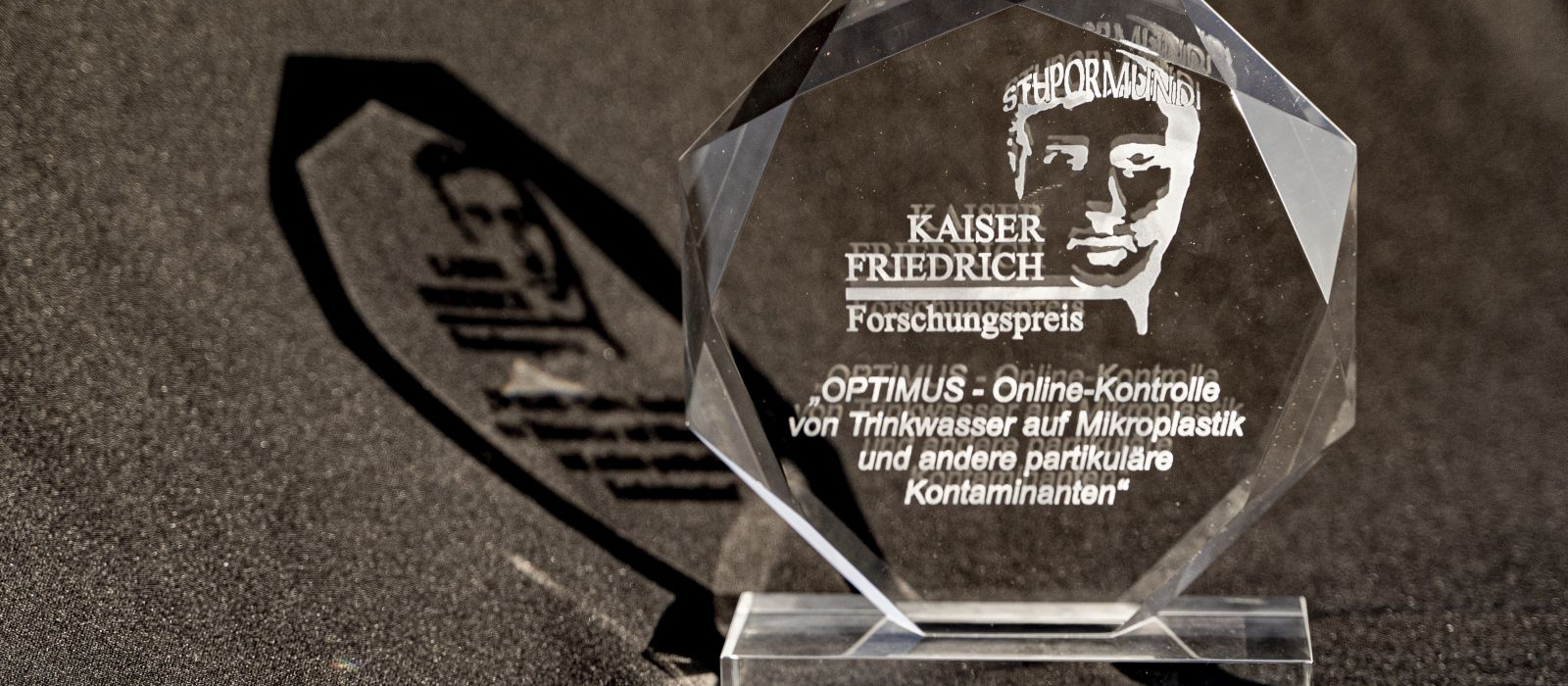
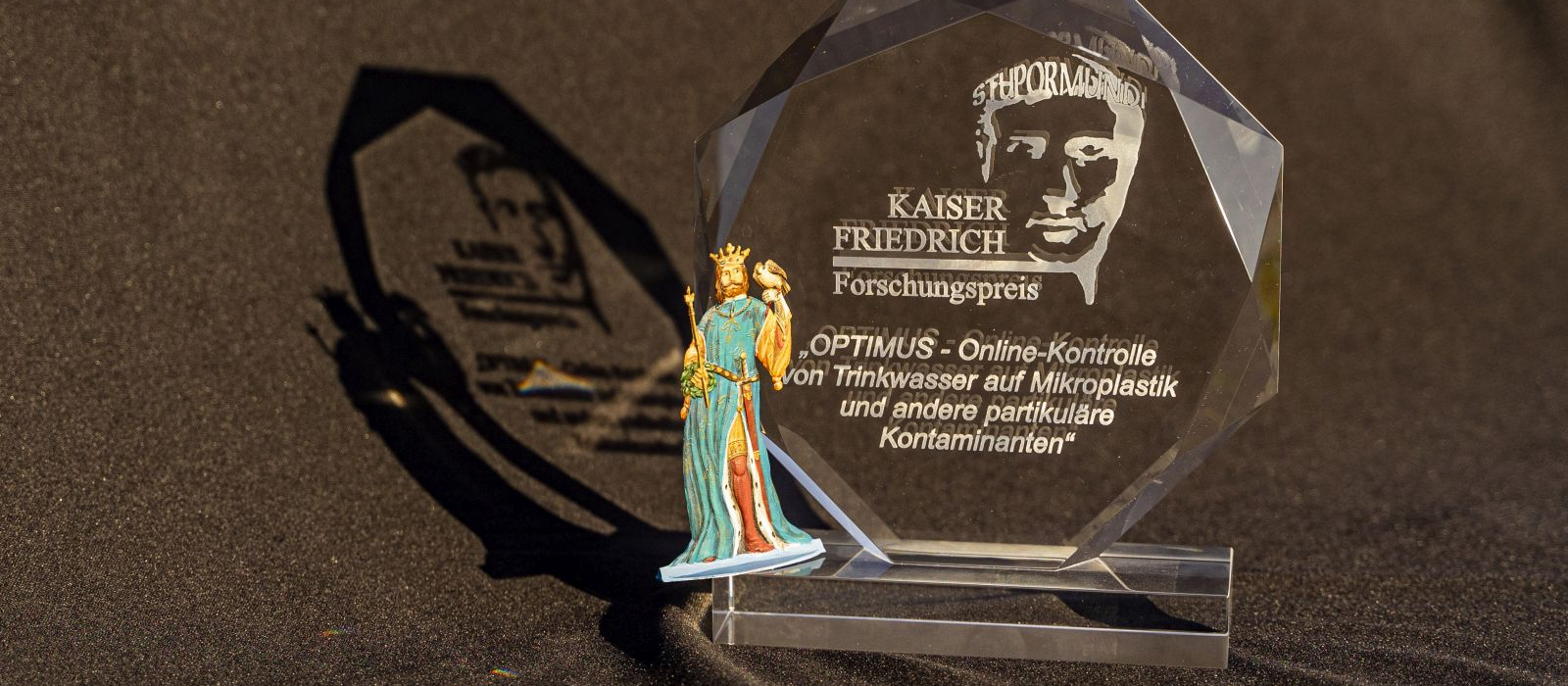
Om de twee jaar kent STÖBICH prijzen toe aan innoverende onderzoeksprojecten op het gebied van optische technologieën. De Kaiser Friedrich Onderzoeksprijs ging dit jaar naar het OPTIMUS-team van de Leibniz Universität Hannover voor uitstekende milieu- en klimaatbescherming.

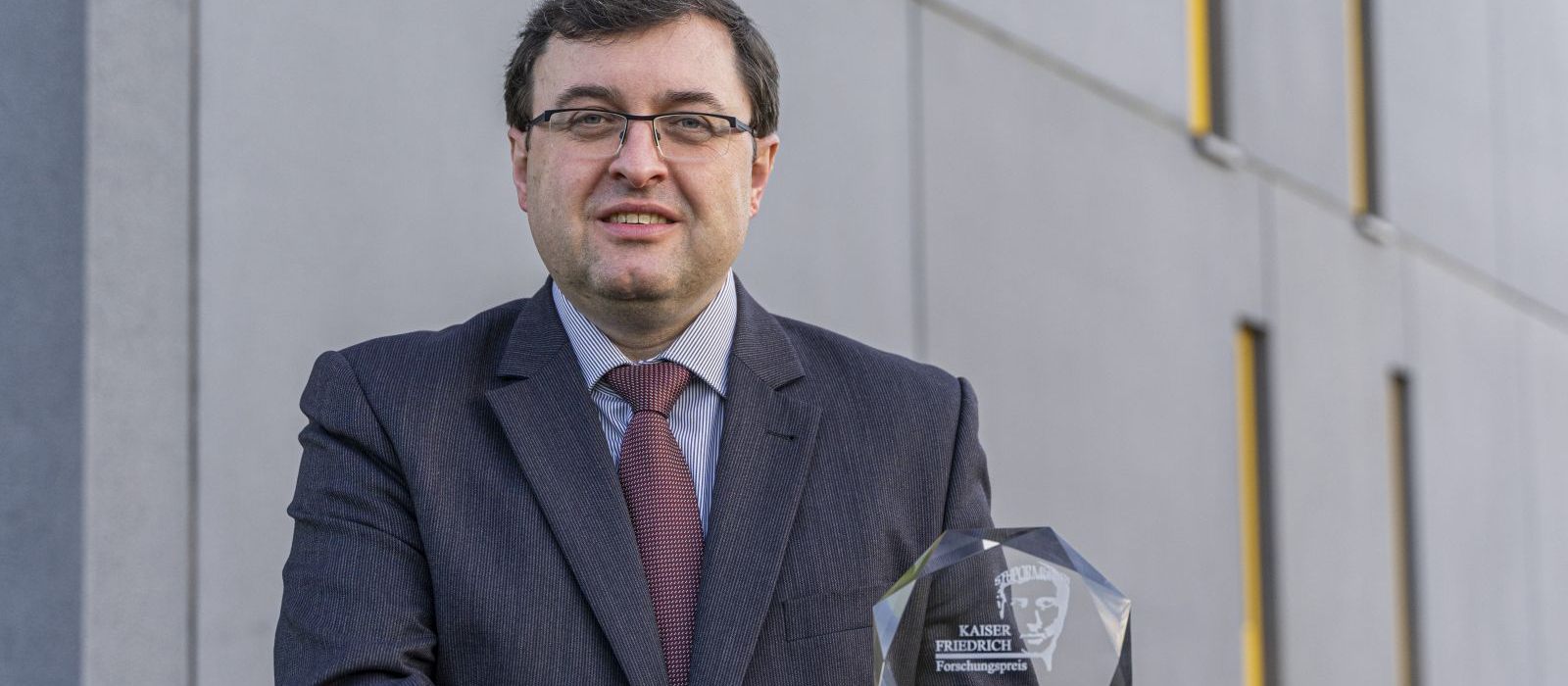
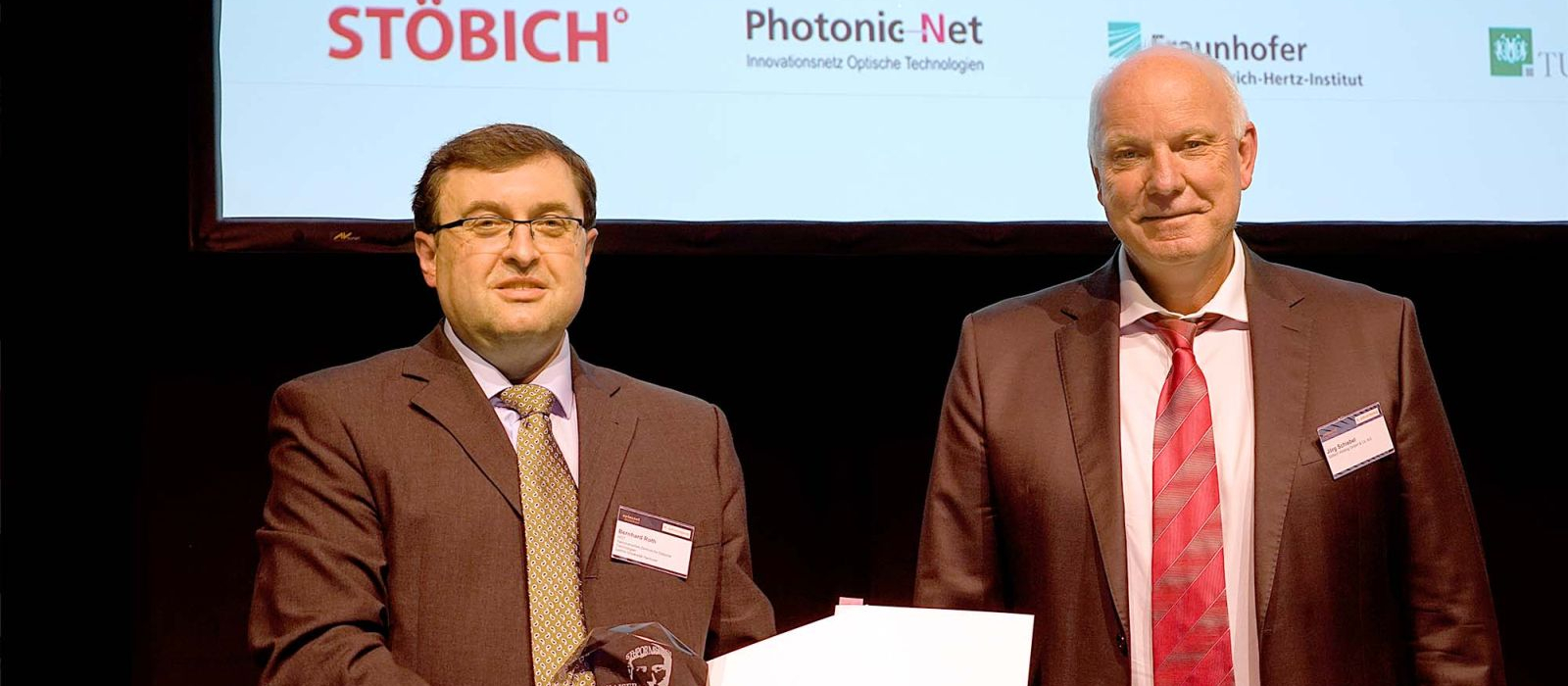
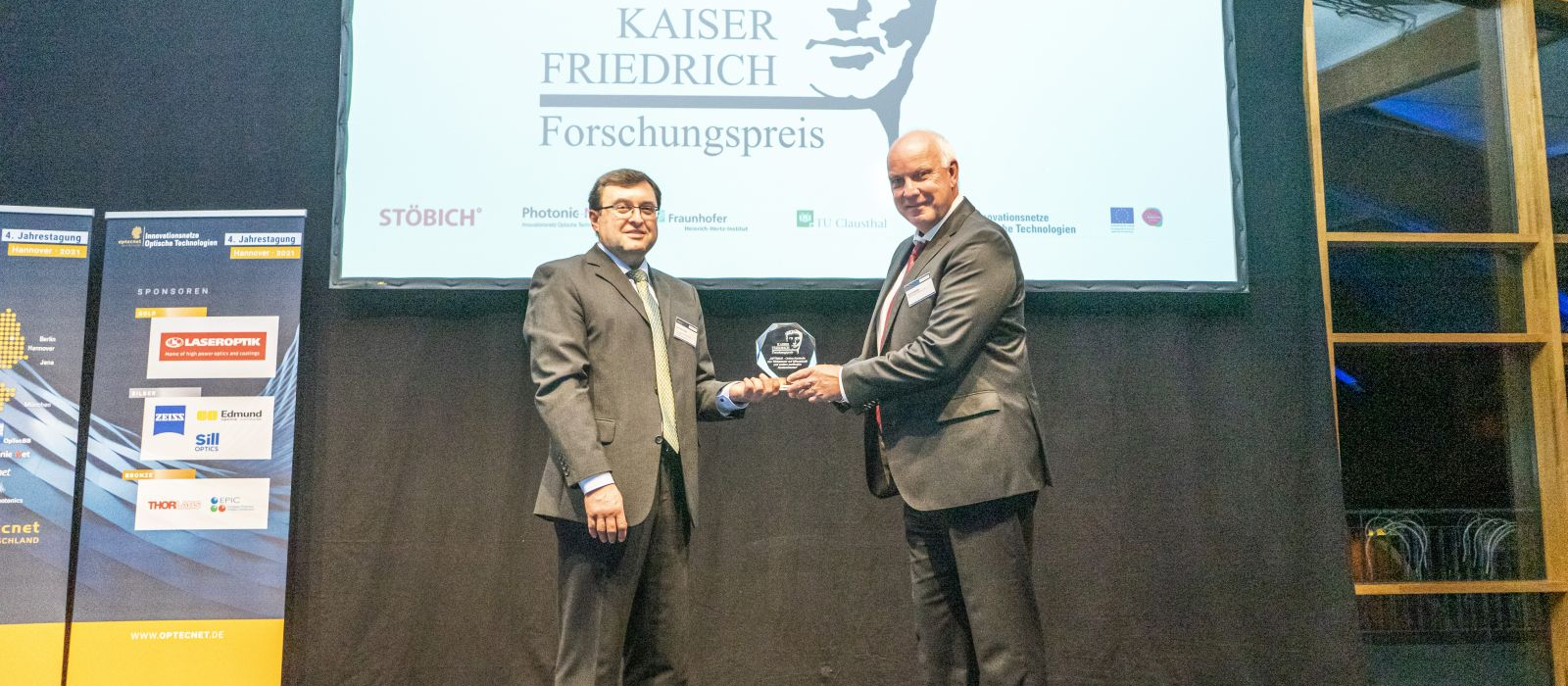
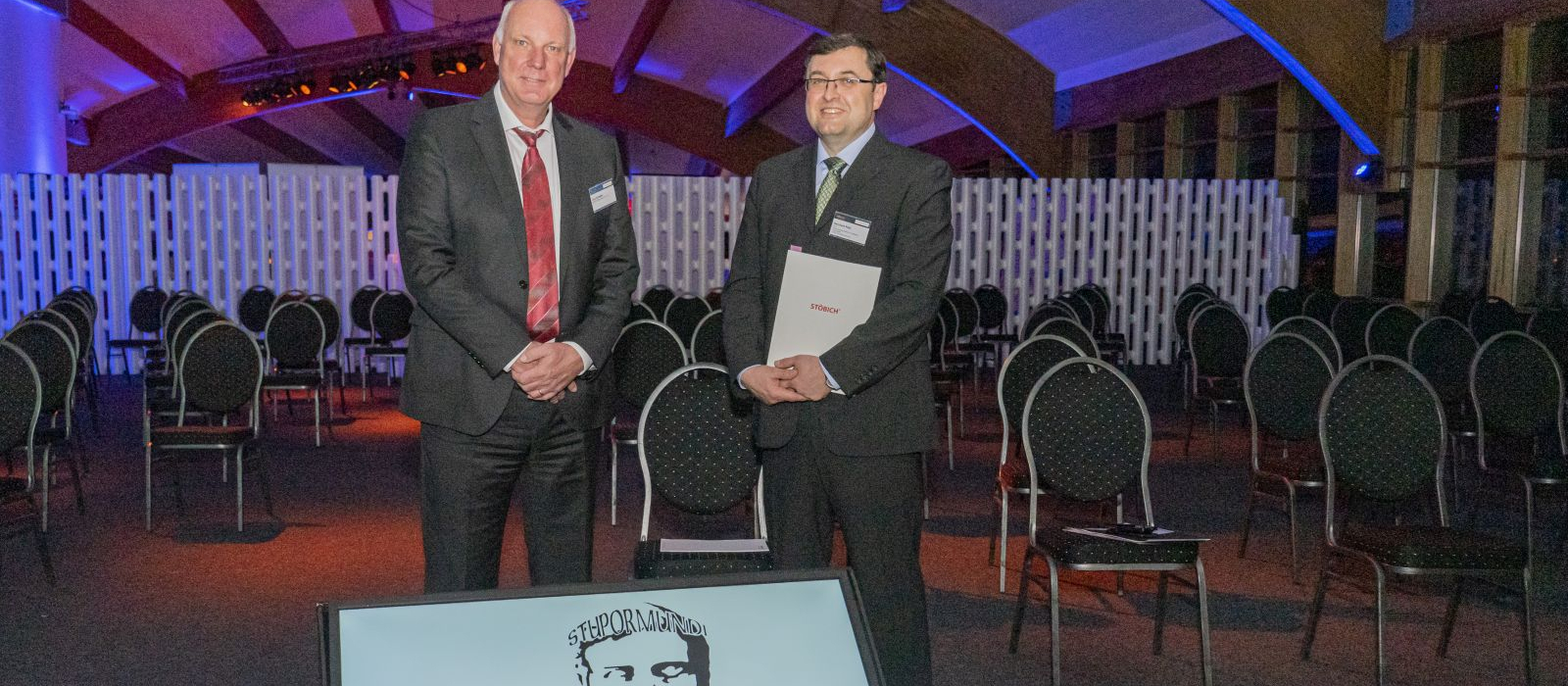
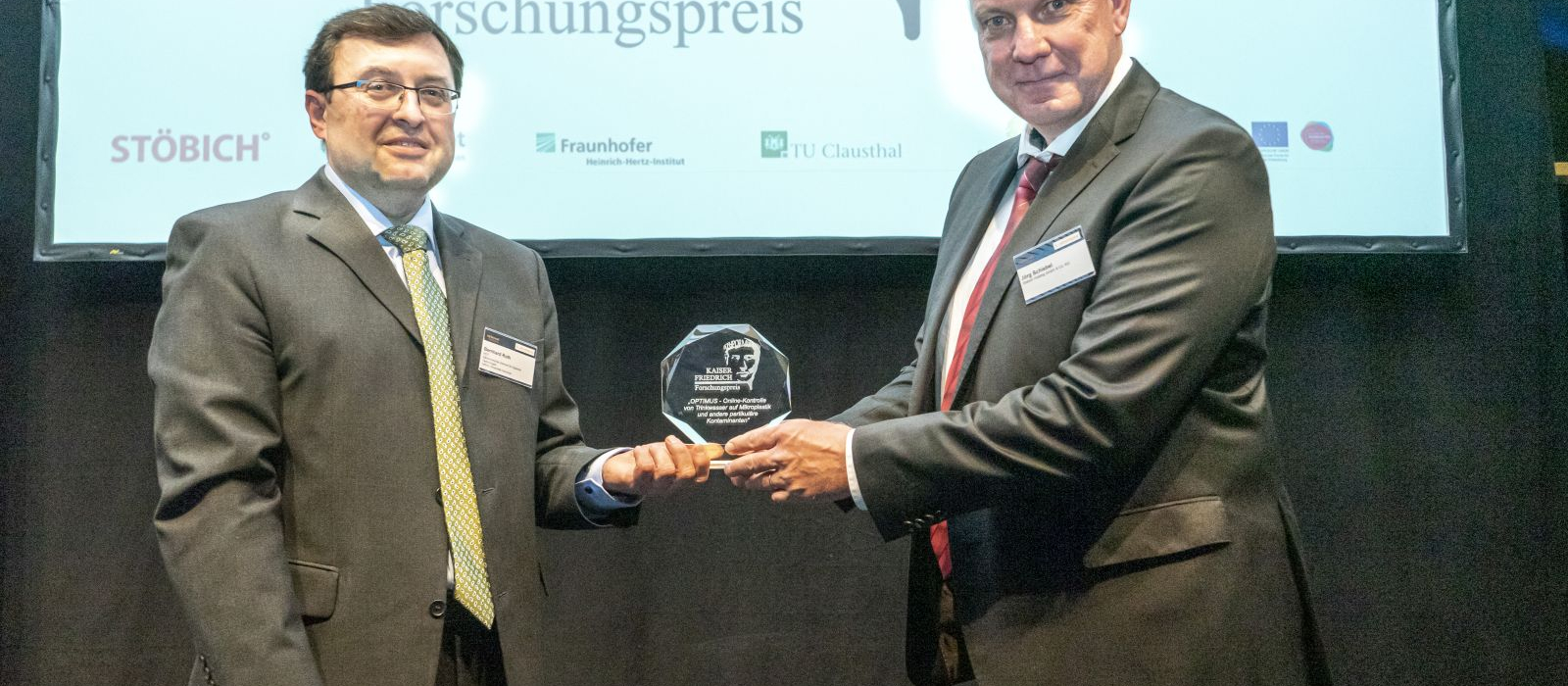
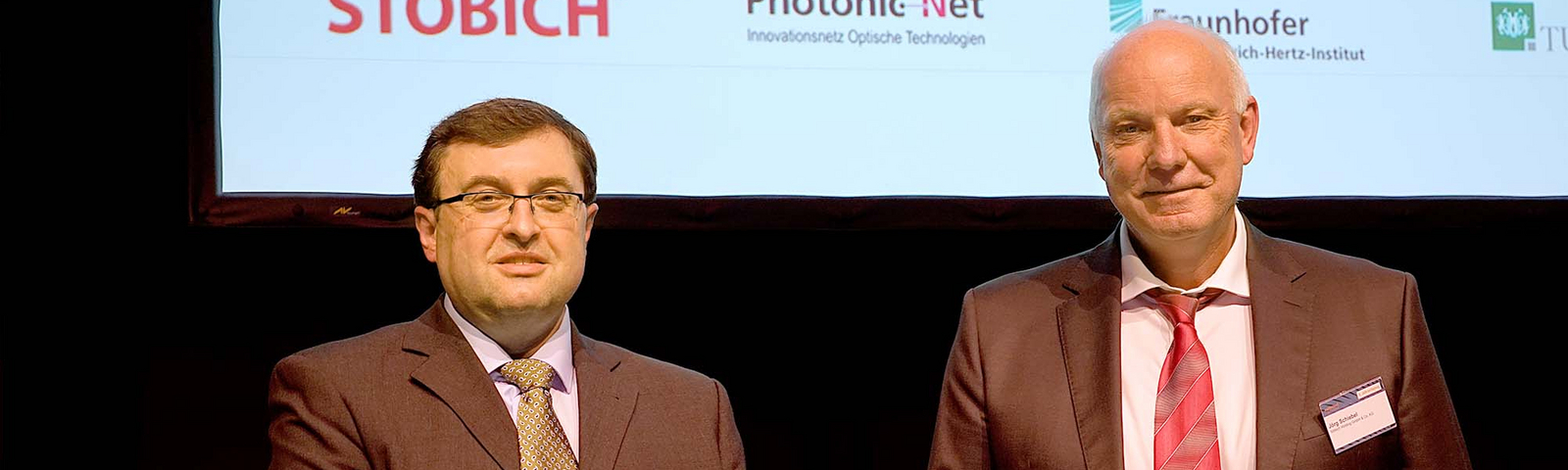
Prof. Bernhard Roth, lid van de PhoenixD-cluster van excellentie aan de Leibniz Universität Hannover, nam de onderzoeksprijs van 15.000 euro met gepaste trots in ontvangst, mede namens zijn collega Dr. Ann-Kathrin Kniggendorf, die verhinderd was het evenement bij te wonen. De prijsuitreiking, die anders traditioneel in de Kaiserpfalz Goslar wordt gehouden, was al twee keer uitgesteld en vond nu plaats in het kader van de 4e OptecNet Jaarconferentie in Expowal Hannover. Jörg Schiebel, CEO van de STÖBICH Group, reikte op 24 november 2021 in een feestelijke sfeer de felbegeerde trofee uit: De oprichter en innovatiestimulans van het bedrijf, Dr.-Ing. Jochen Stöbich, die in het voorjaar overleed, had destijds het initiatief genomen voor de Kaiser Friedrich Onderzoeksprijs.

Het feit dat de prijsuitreiking een jaar moest worden uitgesteld vanwege de pandemie, doet niets af aan de uitstekende prestaties van de bekroonde wetenschappers. Het team onder leiding van Dr. Ann-Kathrin Kniggendorf en Prof. Bernhard Roth van het Hannover Centre for Optical Technologies (HOT) heeft een methode ontwikkeld waarmee microplastics in water kunnen worden gedetecteerd met behulp van optische technologieën. De plastic deeltjes, waarvan sommige microscopisch klein zijn, komen op verschillende manieren in het milieu, ons drinkwater en ons voedsel terecht en komen zo uiteindelijk in ons lichaam terecht. De detectie en eliminatie van deze ongewenste deeltjes is daarom ook een hoge prioriteit voor de samenleving - en dit is waar het OPTIMUS-project, gefinancierd door het Federale Ministerie van Onderwijs en Onderzoek, om de hoek komt kijken.
Waar vroeger ingewikkelde monsters nodig waren, bepaalt het mobiele meetsysteem met behulp van laserlicht binnen milliseconden hoe sterk het water vervuild is met welk soort microplastic. Daardoor kan niet alleen mogelijke schade aan de gezondheid doeltreffender worden voorkomen, maar kan ook de oorzaak van de besmetting nauwkeuriger worden vastgesteld en in het beste geval snel worden verholpen. Dit maakt OPTIMUS tot "een echte innovatie op dit gebied, want momenteel kunnen dergelijke onderzoeken alleen worden uitgevoerd met dure analytische procedures in het laboratorium," aldus Roth. "Het systeem werkt met zuiver optische meetmethoden," legt Dr. Ann-Kathrin Kniggendorf uit, groepsleider bij HOT op het gebied van milieu-analyse. "

Een ingenieus idee dat onze oprichter, Dr. Jochen Stöbich, zeker zou hebben aangesproken. Hij was ervan overtuigd dat licht als werktuig een bijzondere betekenis heeft als dwarsdoorsnede-technologie en een belangrijke sleutel is voor innovaties in talrijke takken van de industrie.

Wij feliciteren de onderzoeksgroep met deze belangrijke uitvinding, die tegelijkertijd een duurzame bijdrage levert aan de bescherming van de natuur en de kwaliteit van het leven van ons allen. Meer informatie is hier beschikbaar: https://www.phoenixd.uni-hannover.de/.