• DE
  • Lösungen
    • Fire Protection Bonnets

      Fire Protection Bonnets

      • Copy-Cap WV
      • Copy-Cap WH
    • Fire protection curtains

      Fire protection curtains

      In case of fire, fire protection curtains close wall and ceiling openings. Their construction (roll-down or folding technique) and the use of different fabrics provide for a wide range of applications as well as different protection goals, classifications and time classes. The casing and guide rails of the highly flexible systems blend almost invisibly into the building and allow plenty of scope for sophisticated architecture and open room concepts.

      • Fibershield®-P
      • Fibershield®-E
      • Fibershield®-I
      • Fibershield®-HC
      • Fibershield®-S
      • Fibershield®-F
    • Conveyor system closures

      Conveyor system closures

      Various production and logistics processes call for the most diverse types of conveyor systems. If these conveyor lines pass through fire-retardant or fire-resistant walls or ceilings, the openings required for this purpose must be provided with fire protection closures to prevent the spread of fire through the conveyor system or the goods conveyed. In the event of fire, conveyor system closures (CSC for short) must close these openings immediately and automatically. Fire resistance classified according to DIN EN 13501-2 is just as important as the smooth clearance of the closing areas in the event of a fire.

      • ECClos®-S
      • ECClos®-Q
      • ECClos®-FLEX-I
      • Ecotube
      • GCC
      • BR100
    • Smoke curtains

      Smoke curtains

      A smoke apron is a part of a smoke control system which also includes other components such as natural smoke and heat exhaust ventilators (EN 12101-2) and mechanical smoke and heat exhaust ventilators (EN 12101-3). Smoke aprons restrict the movement of combustion gases within a building in case of fire.

      • Supercoil
      • Stripecoil
      • Smokeshield-S
      • Fixed smoke apron
    • Smoke protection curtains

      Smoke protection curtains

      Once closed, smoke protection curtains (SPC) restrict the passage of smoke during the phase of fire formation, so that in the event of a fire, there is enough time to rescue people and animals from the room behind the curtain and to recover material assets without the need for respiratory equipment.

      • Fiberseal
    • Gates

      Gates

      The solution for issues with fire protection dampers in ventilation and air conditioning systems in conveyor processes. Stöbich offers fire protection for pneumatic conveyor lines the closing elements of which are not exposed to the flow of conveyed material. This way, the closing element cannot be damaged or contaminated by abrasive conveyed goods.

      • Omnicompact
    • Control units

      Control units

      Each automatic fire protection system needs a control unit. They are critical to safety, because a failure of this function means that the entire investment into a fire protection sealing has been in vain. Control units coordinate both fire detection and interaction with other control units, such as higher-level building control systems or clearing of the closing area of conveyor system closures.

      • RZ7
      • RZ3/4
      • RZ8
      • Battery system
      • Movipower 350/550
      • UPS
      • FFE-KDR
    • Special Solutions
      • ECClos®-D
      • ECClos®-K
      • Universal-B
      • Universal-S
      • ECClos®-FLEX
      • Collar
      • Turbocoil
      • Omnitube
    • Technical Fire Protection
      • Fire Multi Detektor
    • Fire protection for battery storage
      • Strainbox XS
      • Strainbox S
      • Strainbox L
      • Strainbox XL
      • Strainlock
      • Packaging Cushions
    • Service
  • Referenzen
  • Themenwelten
  • Weltmarktführer
  • Nachhaltigkeit
  • News
  • Jobs
  • Kontakt
Landesfeuerwehrverband bei STÖBICH

Landesfeuerwehrverband bei STÖBICH

Landesfeuerwehrverband bei STÖBICH

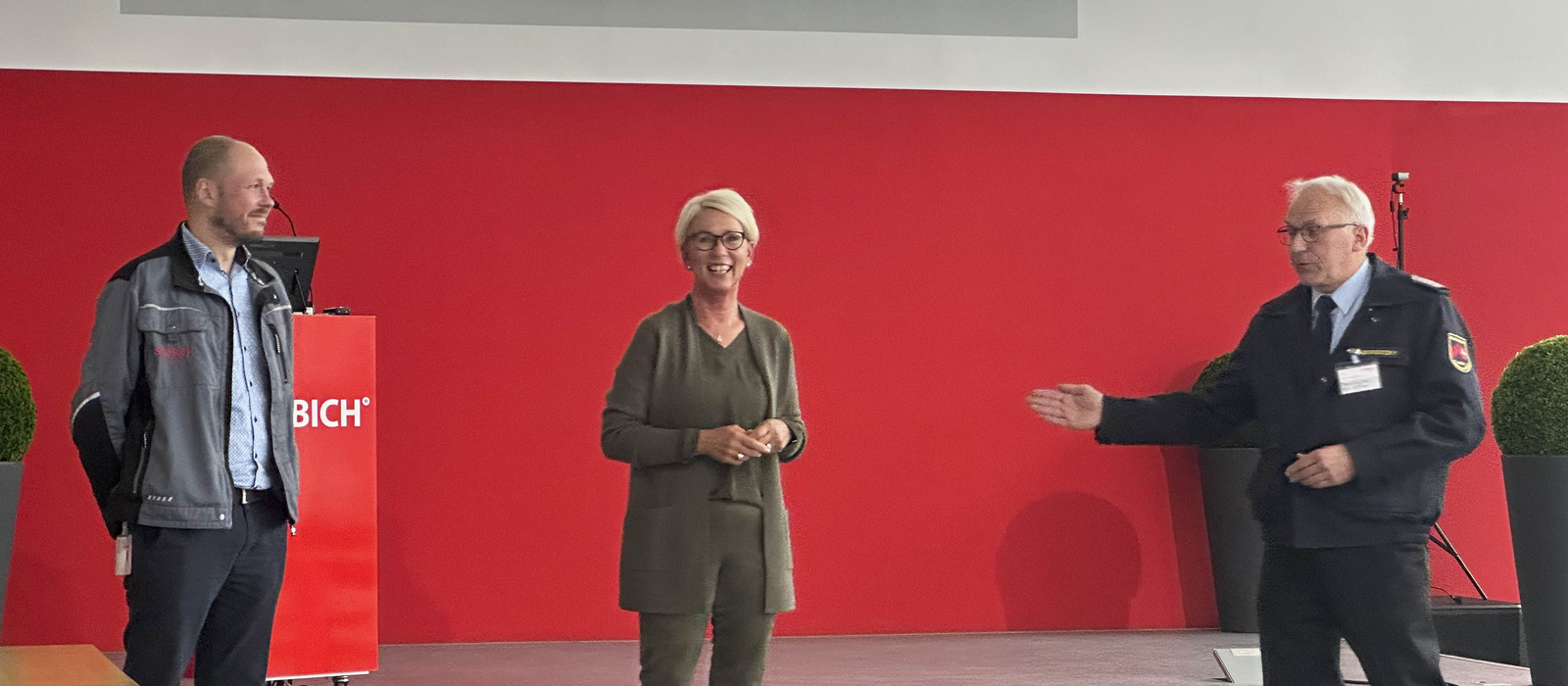
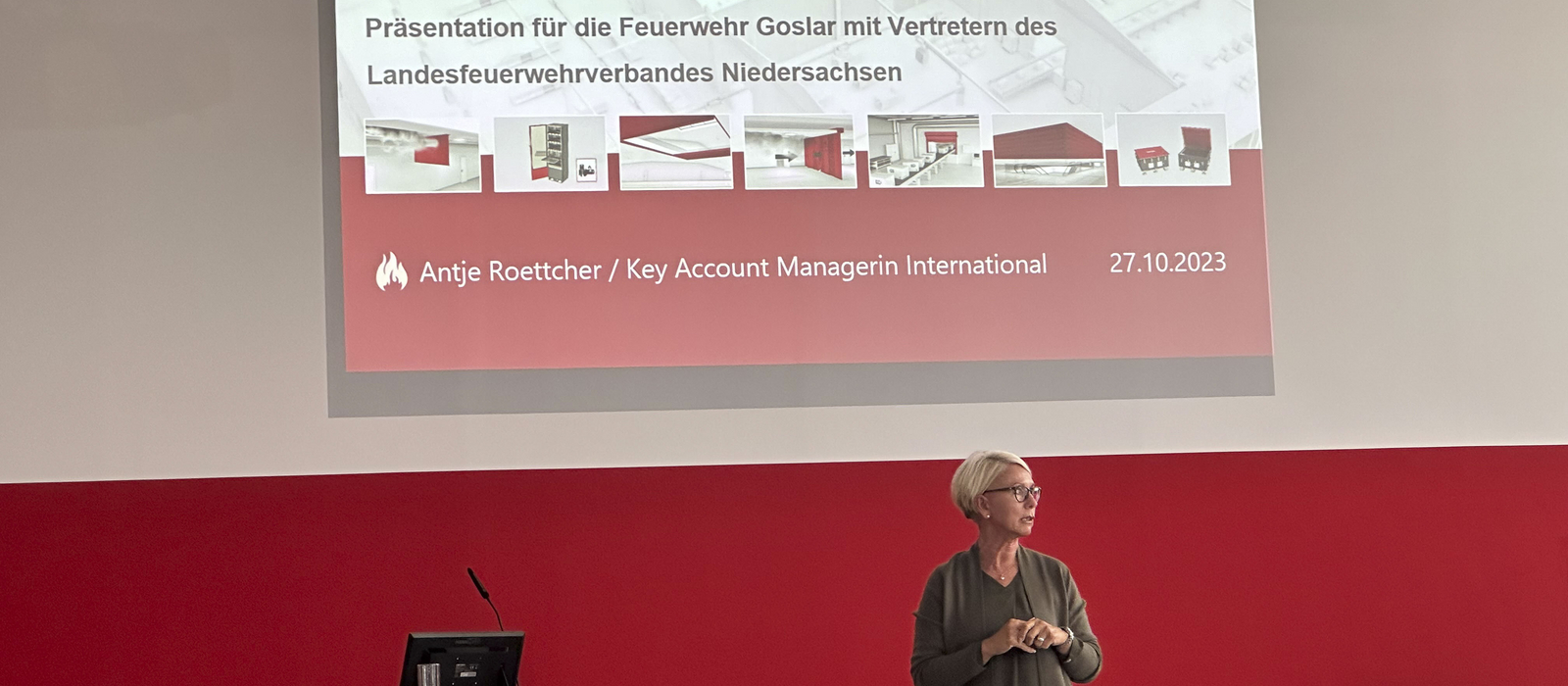
Der Landesfeuerwehrverband Niedersachsen hat Ende Oktober eine Ausschusssitzung zu „Einsatz, Umweltgefahren, Katastrophenschutz“ bei der Freiwilligen Feuerwehr in Goslar abgehalten. Was lag da näher, als sich bei STÖBICH eingehend über Sicherheit und Brandschutz im Umgang mit Lithium-Ionen-Batterien zu informieren?

STÖBICH und die Freiwillige Feuerwehr Goslar verbindet seit einigen Jahren das gemeinsame Interesse an der sicheren Lagerung bzw. dem Transport von kritischen Energiespeichern. In enger Zusammenarbeit entwickelten die Brandschutzspezialisten clevere Lösungen für Lithium-Ionen-Batterien, die im Fall einer Havarie gefährliche Gase freisetzen können. Solche ➥ StrainBox Transportboxen von STÖBICH wurden an die Goslarer Feuerwehr übergeben und kamen erst kürzlich wieder bei dem ➥ Brand eines Elektrorollers in Dörnten zum Einsatz.

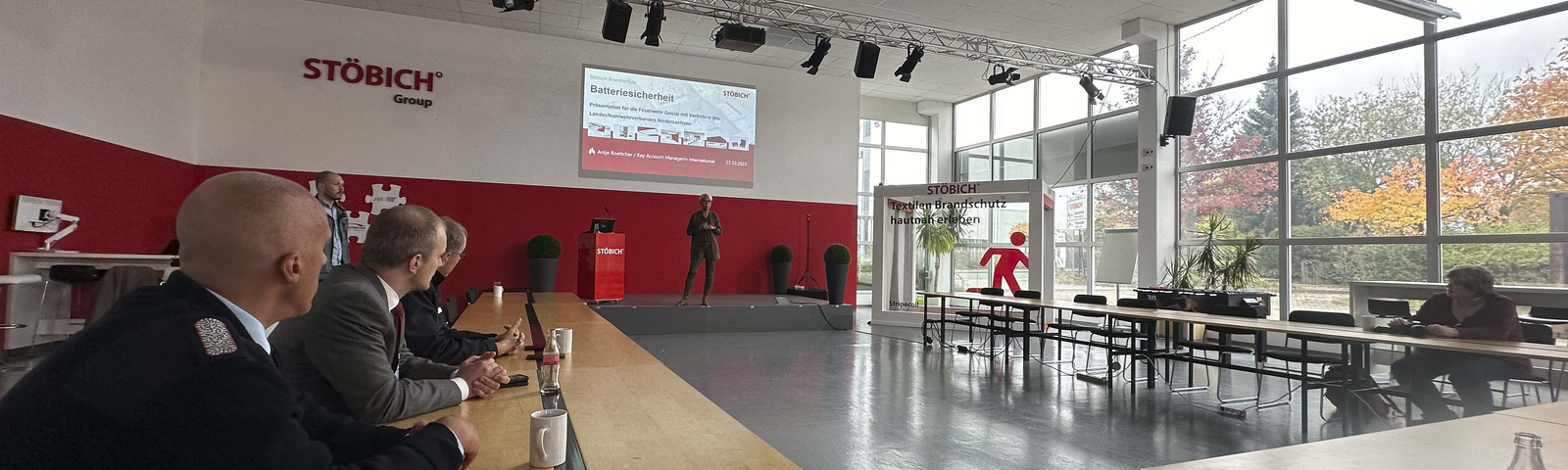
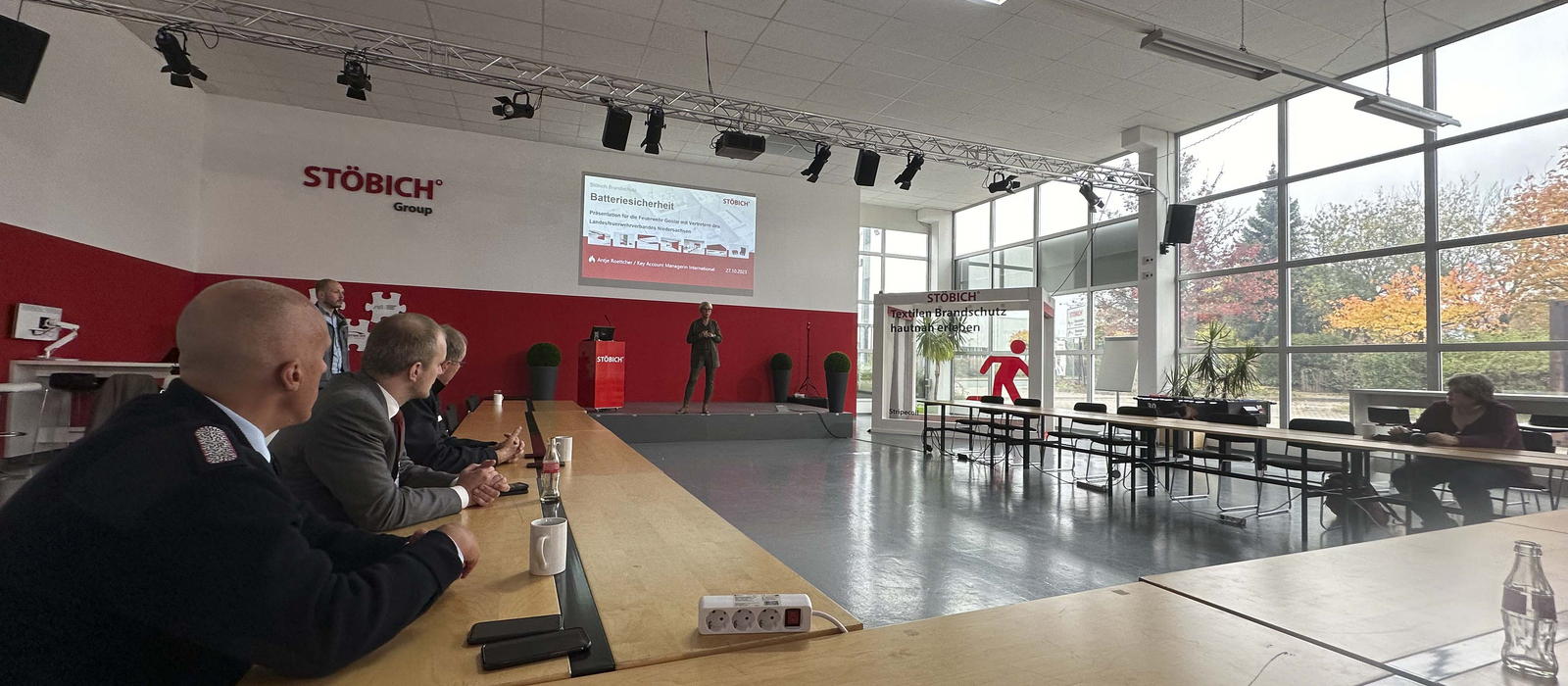
Am vergangenen Freitag besuchten uns anlässlich des EUK-Ausschusses neben dem Goslarer Kreisbrandmeister und seinem Stellvertreter auch andere Kreisbrandmeister verschiedener niedersächsischer Landkreise, Vertreter des Niedersächsischen Innenministeriums sowie der Präsident des Landesfeuerwehrverbandes Niedersachsen. Insgesamt 13 Personen nahmen an unserer Informationsveranstaltung im STÖBICH Showroom teil. Dabei ging es unter anderem um Li-Ionen-Batteriesysteme (LiBS) und deren Aufbau, Funktion und Bauformen sowie dem damit verbundenen Brandverhalten und Gefahrenpotenzial. Nach der theoretischen Vorstellung der Batteriesicherheitssysteme StrainBox und StrainLock konnten die Teilnehmenden die Produkte bei einem Rundgang kennenlernen. Die Besichtigung des Batterietestzentrums auf dem STÖBICH Gelände bildete den krönenden Abschluss.

Für unsere Gäste war es eine „sehr interessante Veranstaltung mit tollen Einblicken in die Gefahren von Lithium-Ionen-Batterien und wie man sie mit entsprechenden Produkten sicher handhaben kann.“ Marc Dinse von STÖBICH fasste abschließend zusammen: „Wir sind im engen Austausch mit der Feuerwehr Goslar und freuen uns immer wieder über Anfragen zu solchen Veranstaltungen. So können wir einen wichtigen Teil zum sicheren Umgang mit Lithium-Ionen-Batterien beitragen. Die Veranstaltung hat wieder gezeigt, dass auch bei der Feuerwehr großer Handlungsbedarf beim richtigen Umgang mit Lithium-Ionen-Batterien besteht. Das gilt sowohl für Einsätze im Zusammenhang mit brennenden Batterien als auch beim Umgang mit eigenem batteriebetriebenem Equipment.“

Copyright Fotos: © Uwe Fricke
  • Landesfeuerwehrverband bei STÖBICH
  • Landesfeuerwehrverband bei STÖBICH
  • Landesfeuerwehrverband bei STÖBICH