• FR
  • Solutions
    • Fire protection curtains

      Fire protection curtains

      Fire protection curtains are seal openings in walls and ceilings in case of fire. The constructional set-up (rolling- or folding technology) and the use of different fabrics offer a wide application spectrum as well as different protection targets or classifications and time classes. Casings and side guides of those flexible applicable systems are integrated almost invisibly in the building and provide much scope for design of sophisticated architecture for opened designs.

    • Conveyor system closures

      Conveyor system closures

      Manifold production - and logisitc processes require different construction types of conveying systems. If the haulage drifts are passing through fire-retarding resp. fire-resisting walls or ceilings, the necessary openings must be provided with fire protection closures to avoid the expansion of the fire by conveyor technique or by conveyed material. In case of fire the conveyor system closures have to seal those openings immediately and automatically. Thereby a classified fire resistance as well as the smoothly clearing of the closing area must be respected in case of release.

    • Smoke curtains

      Smoke curtains

      A smoke curtain is part of unit keeping areas free from smoke and may include building parts like natural smoke and heat venting systems and automatic smoke and heat venting systems. Smoke curtains restrict the movement of fire gases inside a building in case of fire.

    • Smoke protection closures

      Smoke protection closures

      In closed condition smoke protection closures restrict the passage of smoke in the phase of fire formation so as to enable the rescue of people, animals or materials assets in case of a fire in the room positioned behind it without the need of breathing protection.

    • Tube sealings

      Tube sealings

      The solution to problems with fire protection dampers for ventilation and air conditioning systems in conveying processes. Stöbich offers fire protection for pneumatic conveying lines where the closing elements are not exposed to the flow. Thus, damage or contamination of the closure element is avoided by abrasive conveyed goods.

    • Controls

      Controls

      Control systems are necessary for all automatic fire protection systems! They are safety-relevant, because without their function or in the event of a malfunction, the entire investment of a fire protection partition would be useless. Controllers coordinate both fire detection and the interaction with other controls, like superordinate building control or the retraction of the closing area at conveyor closing area.

    • Médiathèque Charles Nègre | Grasse, France

      Médiathèque Charles Nègre | Grasse, France

      The Médiathèque Charles Nègre in Grasse, France, is an impressive example of contemporary architecture that reflects the cultural and historical importance of the region. The information center with space for education, culture and encounters was opened in 2011 and designed by the renowned French architecture firm Marc Barani. The building combines modern aesthetics with the traditional architecture of Provence, creating a harmonious link between old and new, for example by combining modern materials such as glass and steel with local natural stone. The generous window fronts create an atmosphere flooded with light. Ecological sustainability is achieved through natural ventilation and the resulting reduction in energy consumption; green spaces are also integrated on various levels. Our <a href="/us/solutions/fire-protection-curtains/stoebich-fire-smoke-curtain-hc"><b>➥ horizontal Fire and smoke curtain hc</b></a> fire protection curtains fit perfectly into this marvel of contemporary architecture. They securely close the ceiling openings in the event of a fire, but otherwise remain invisible and let in plenty of light and air. Copyright attribution: © Ivry Serres

  • Références
  • Mondes thématiques
  • Leader du marché mondial
  • Durabilité
  • Actualités
  • Contact

"La résine aura un autre aspect - mais elle sera prête pour l'avenir"

"La résine aura un autre aspect - mais elle sera prête pour l'avenir"

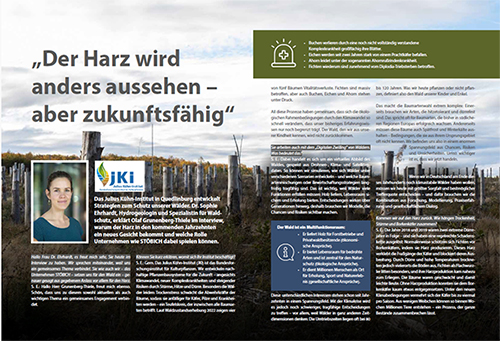
Ce que font les parasites, la sécheresse et le changement climatique et comment nous pouvons les contrer. Dr Sophie Ehrhardt, hydrogéologue et spécialiste des forêts à l'Institut Julius Kühn, en interview avec STÖBICH.

Nos racines se trouvent dans le Harz, et avec elles notre coresponsabilité vis-à-vis de la forêt. Au siège de STÖBICH à Goslar, nous sommes confrontés quotidiennement au dépérissement des forêts.

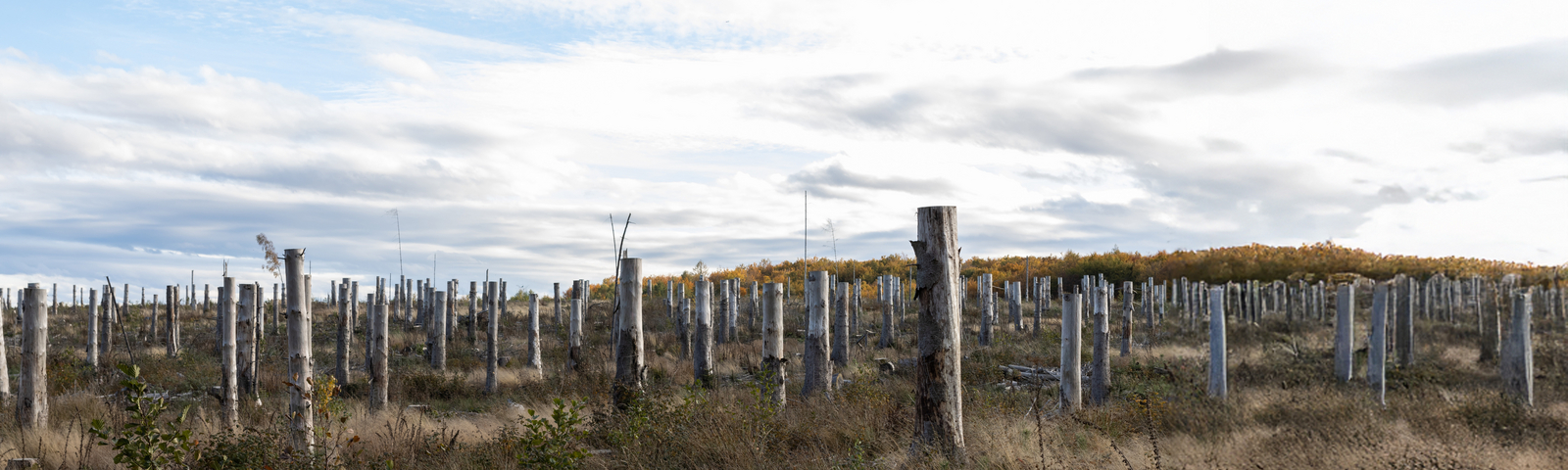
En effet, le stress dû à la sécheresse, les bostryches et le changement climatique mettent massivement à mal nos forêts. Mais il y a de l'espoir, car le Harz est à la veille d'un changement profond. En agissant ensemble, nous pouvons contribuer activement à façonner l'avenir de la forêt.

Dans l'interview du Dr Sophie Ehrhardt, hydrogéologue et spécialiste des forêts à l'Institut Julius Kühn, nous parlons des principaux défis et des opportunités qui en découlent. Nous montrons également comment des actions de reboisement et des mesures de protection peuvent apporter une précieuse contribution.


Lisez l'intégralité de l'interview ici: