
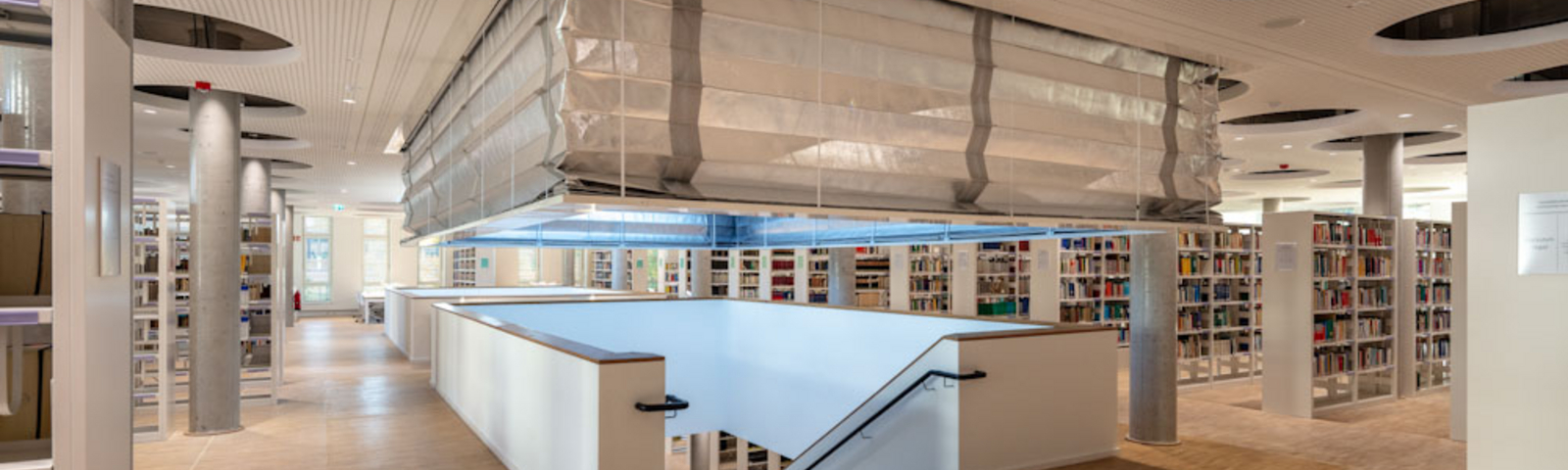
Brandbeveiliging op alle niveaus
Structurele brandbeveiliging is altijd een uitdaging. Zeker wanneer niet alleen ruimtes op één verdieping, maar delen van meerdere verdiepingen moeten worden afgesloten: bijvoorbeeld bij trappen zoals in de toekomstgerichte, duurzame nieuwbouw van het Juridicum aan de Universiteit van Kiel(kort: CAU).
Het onderwijs- en onderzoeksgebouw van 5 verdiepingen bestaat uit een compacte basiszone met daarboven twee in elkaar grijpende blokken. De sokkel herbergt de centrale foyer, de bibliotheek, serviceruimtes en de seminariezalen.
Onze centrale focus ligt op de gespecialiseerde bibliotheek, die zich uitstrekt over drie niveaus met zijn open boekenplanken, individuele en groepswerkruimtes. De verdiepingen zijn met elkaar verbonden via brede trappen die zijn ontworpen voor een groot aantal mensen. Hier moeten de brandbeveiligingssystemen zowel mensen als waardevolle boeken beschermen bij brand.
De uitdaging
Multidimensionale brandbeveiliging die onzichtbaar past
Het ultramoderne universiteitsgebouw wordt gekenmerkt door zijn ruim, lichtovergoten interieur interieur uit. Dakramen zorgen bijvoorbeeld voor natuurlijke verlichting en creëren een prettige leersfeer.
De geïnstalleerde brandbeveiligingssystemen mogen het elegante interieurontwerp niet verstoren en moeten zo discreet mogelijk in het totaalbeeld worden geïntegreerd. Ze moeten de vloeren zowel verticaal als horizontaal en rond de hoeken afsluiten. BNB-gecertificeerd, het Juridicum is een voorbeeldproject op het gebied van duurzaamheid. Zo maken ook onze systemen deel uit van het totaalconcept. Zo gebruiken we voor onze textiele brandbeveiligingssystemen alleen transportboxen van gerecyclede materialen.
De oplossing
Brandgordijnen die horizontaal en verticaal sluiten
De bijna onzichtbaar aangebrachte brandbeveiligingssystemen worden gekenmerkt door smalle behuizingen en hightech textiel, die de kameropeningen bij brand volledig automatisch sluiten (bij het horizontale systeem met een extra elektromotorische aandrijving). Naast de esthetische component scoren onze brandwerende gordijnen ook met de geringe benodigde ruimte bij de montage.
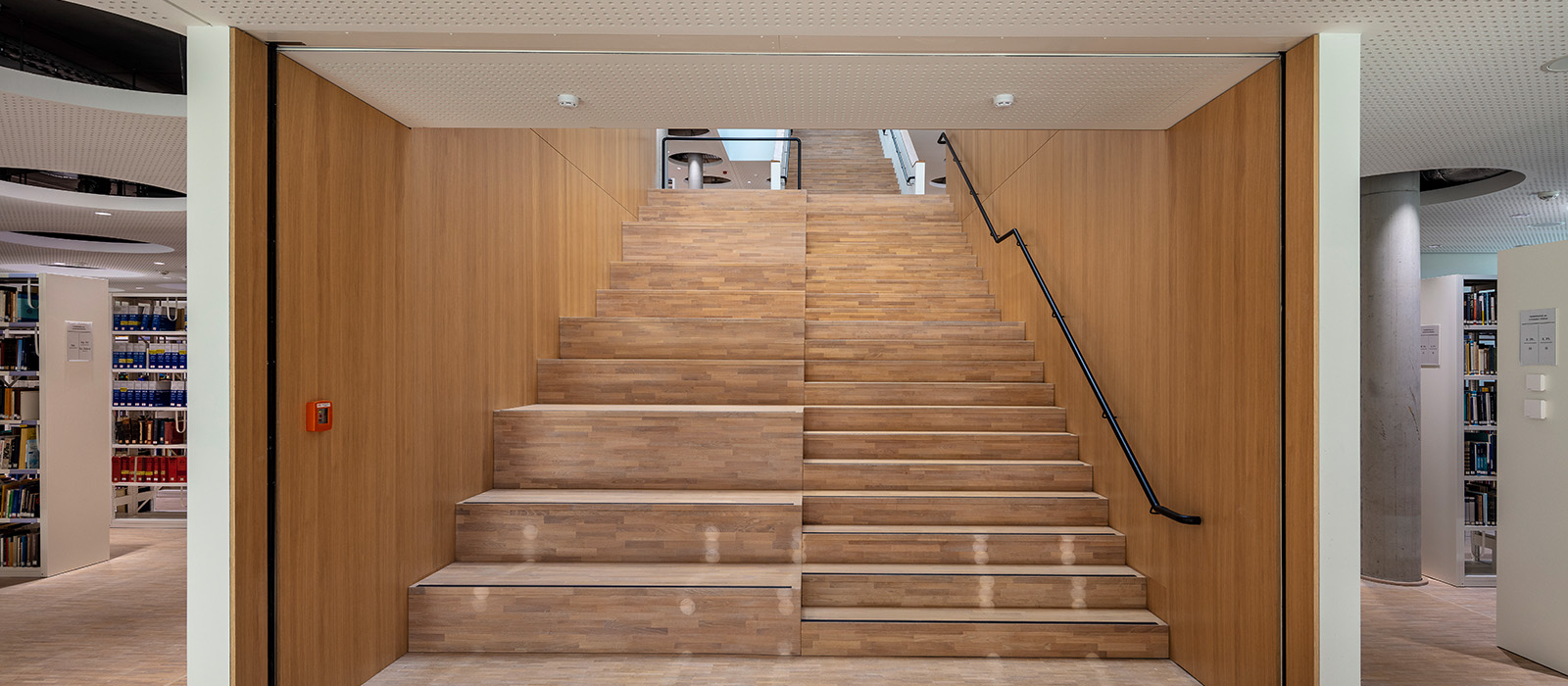
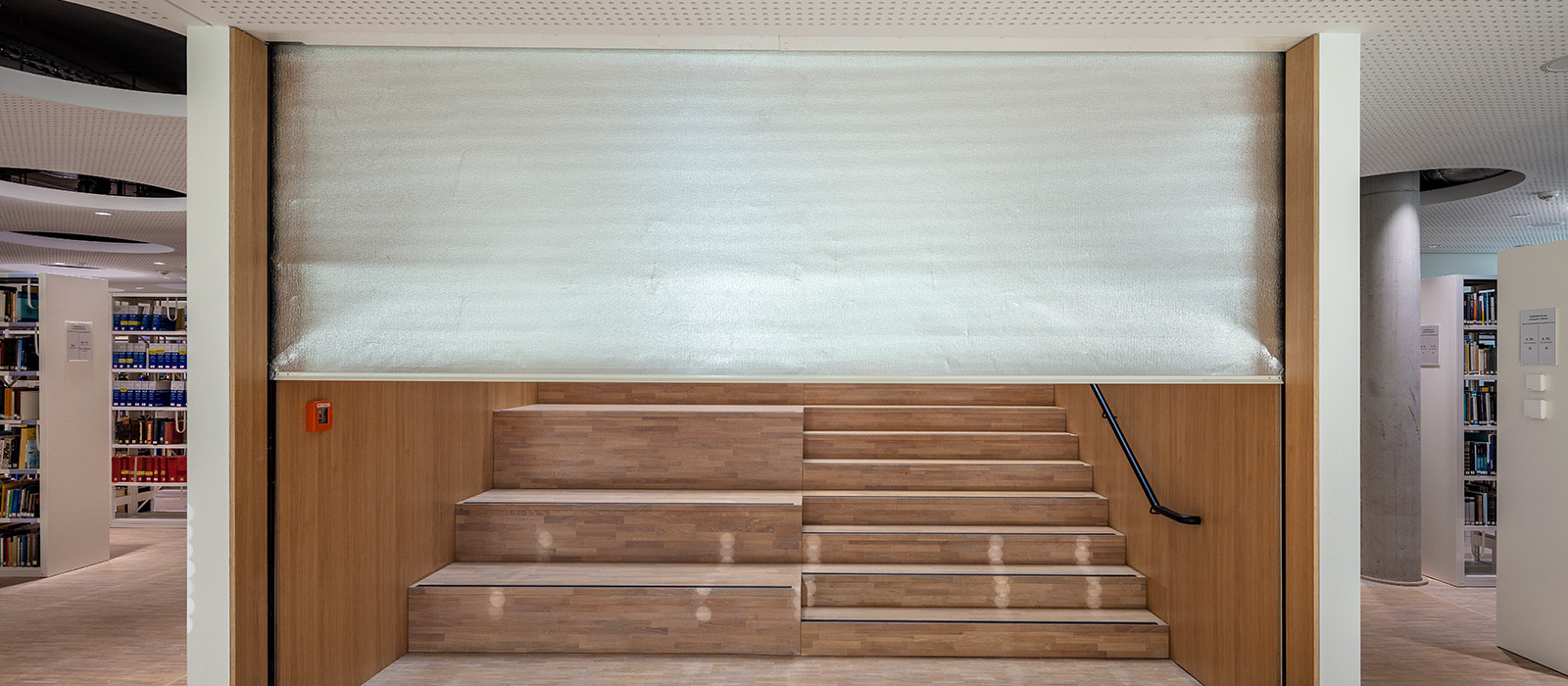
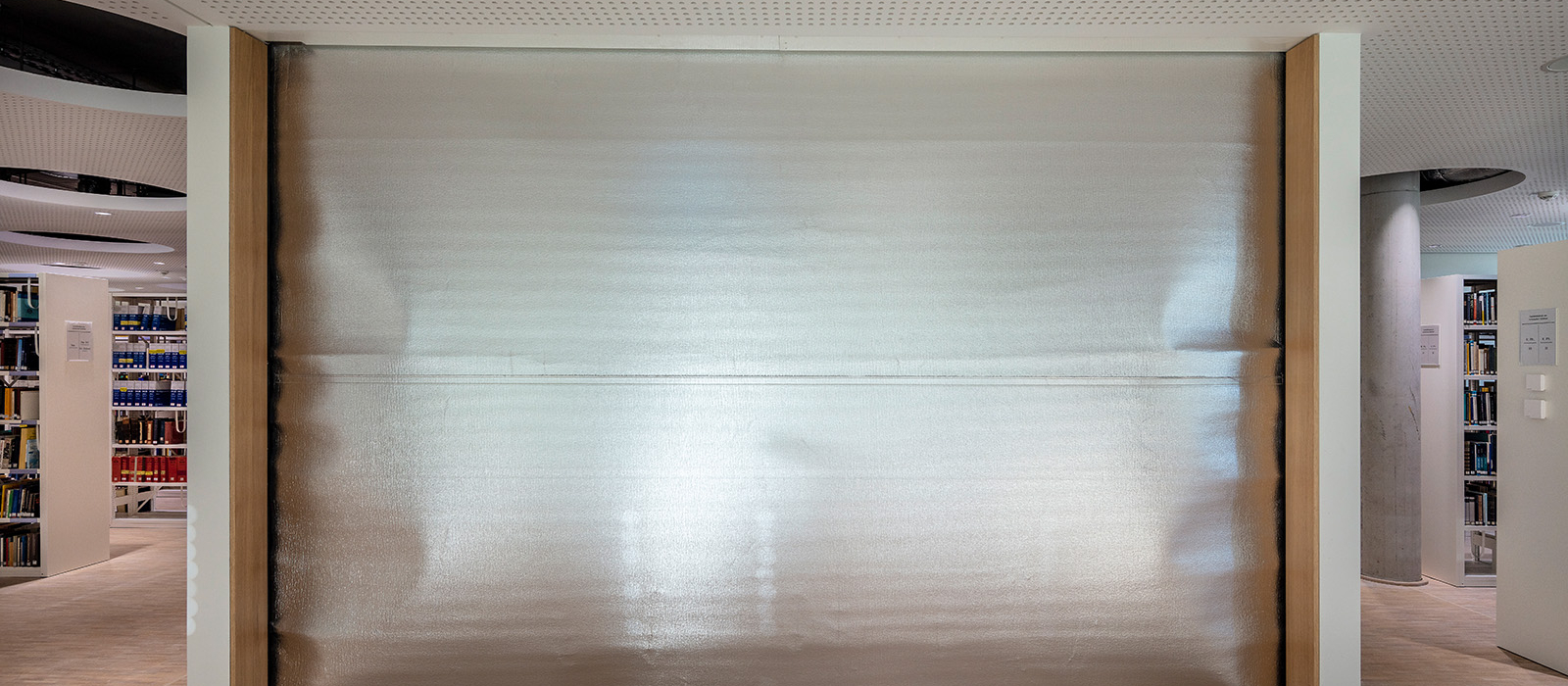
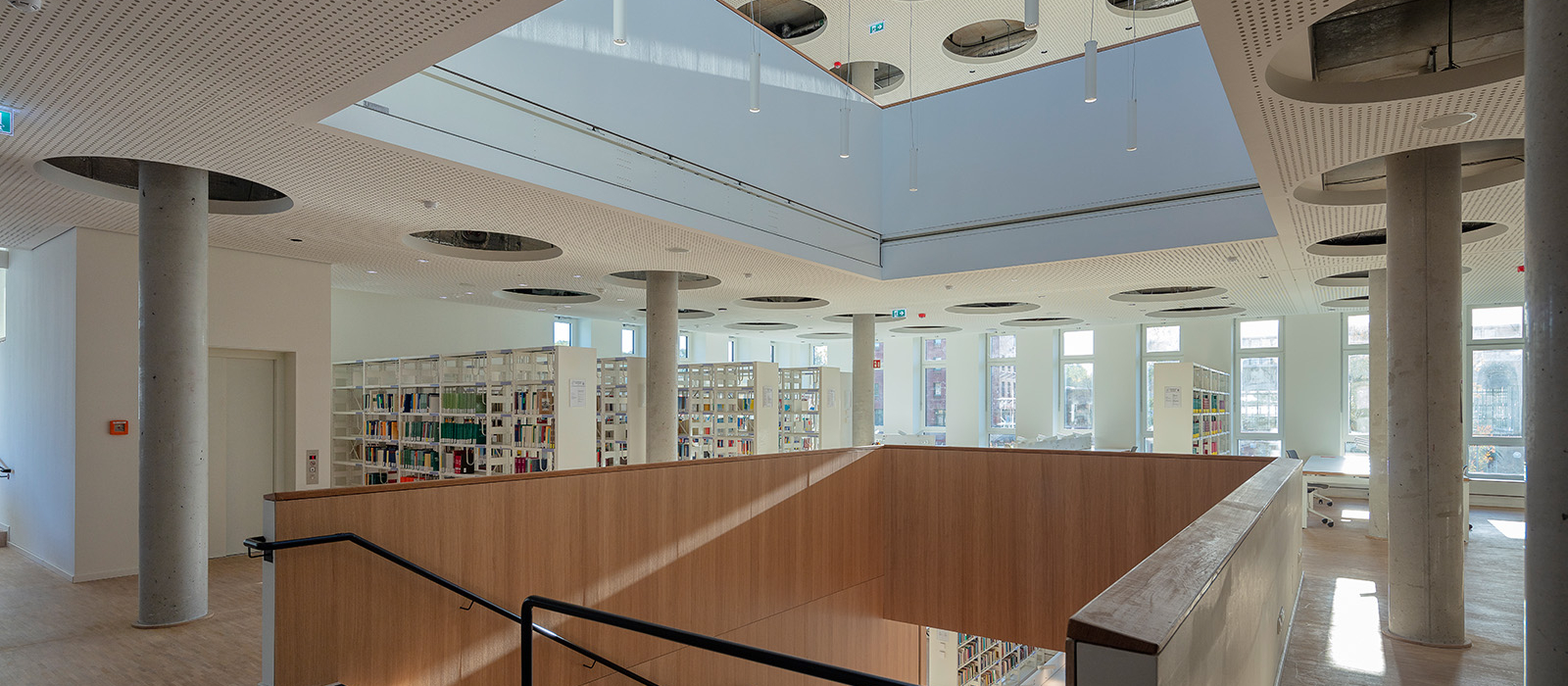
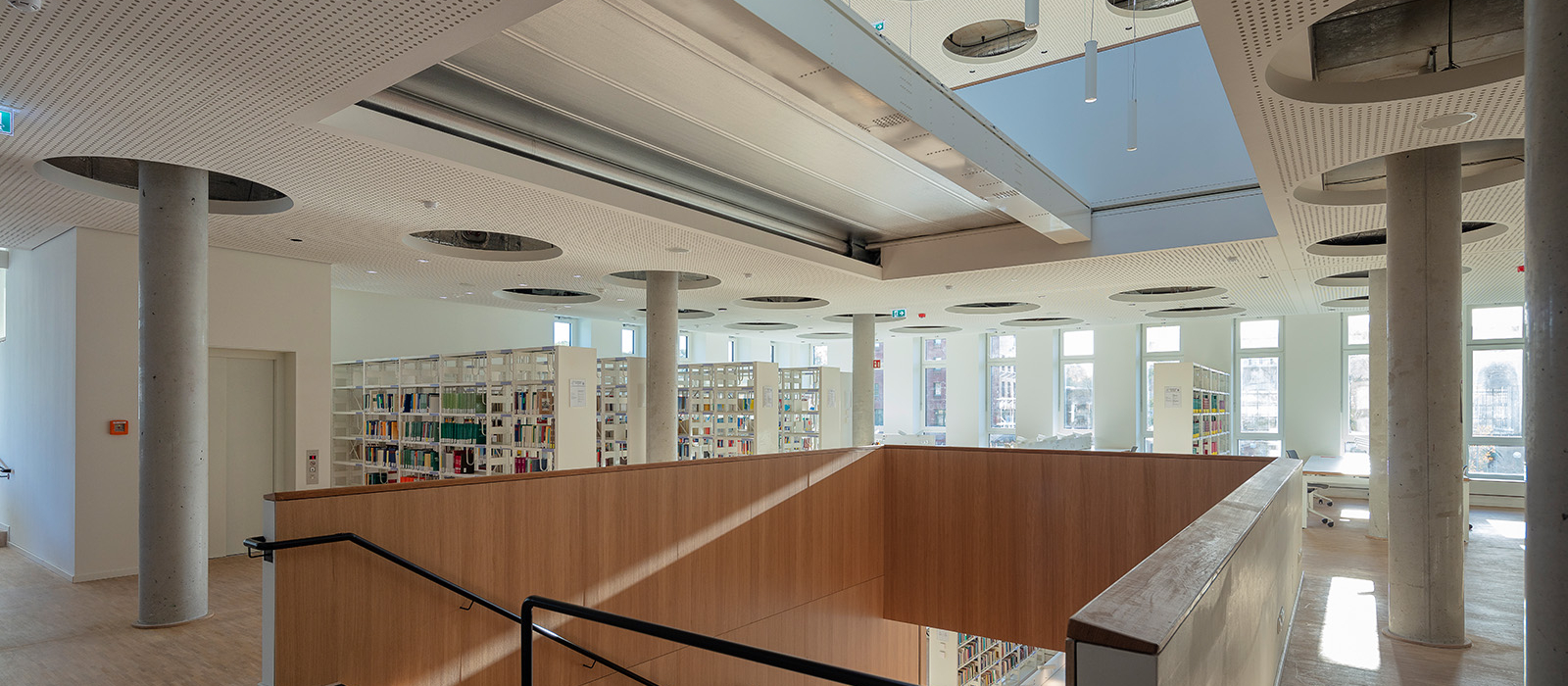
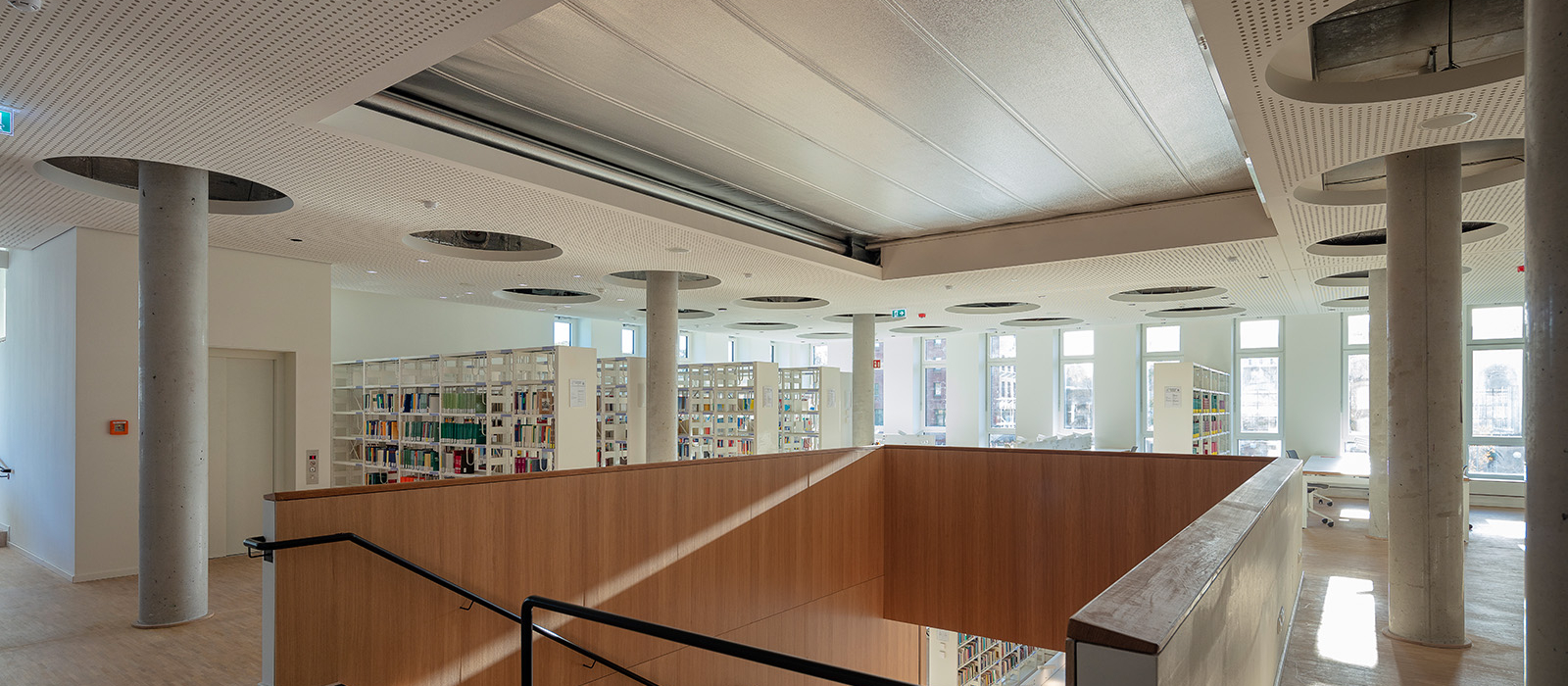
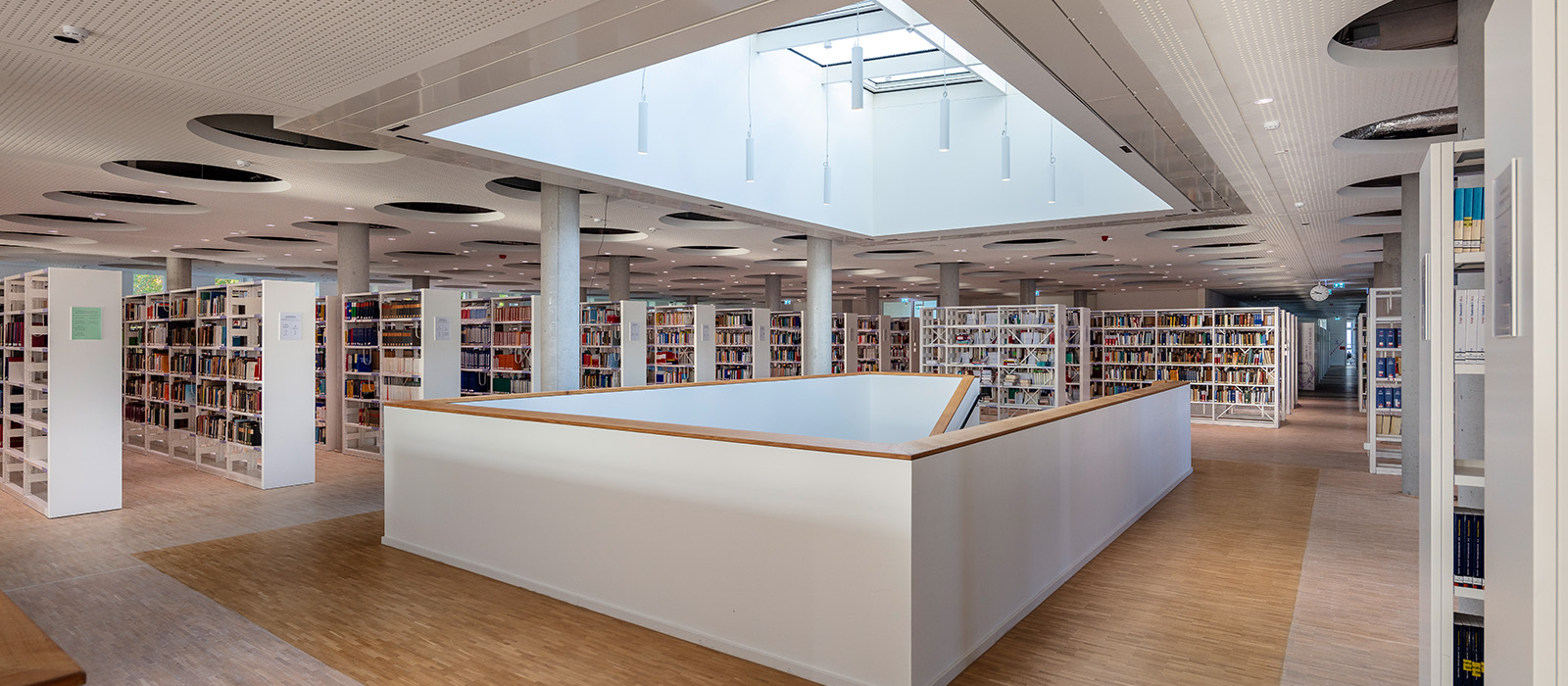
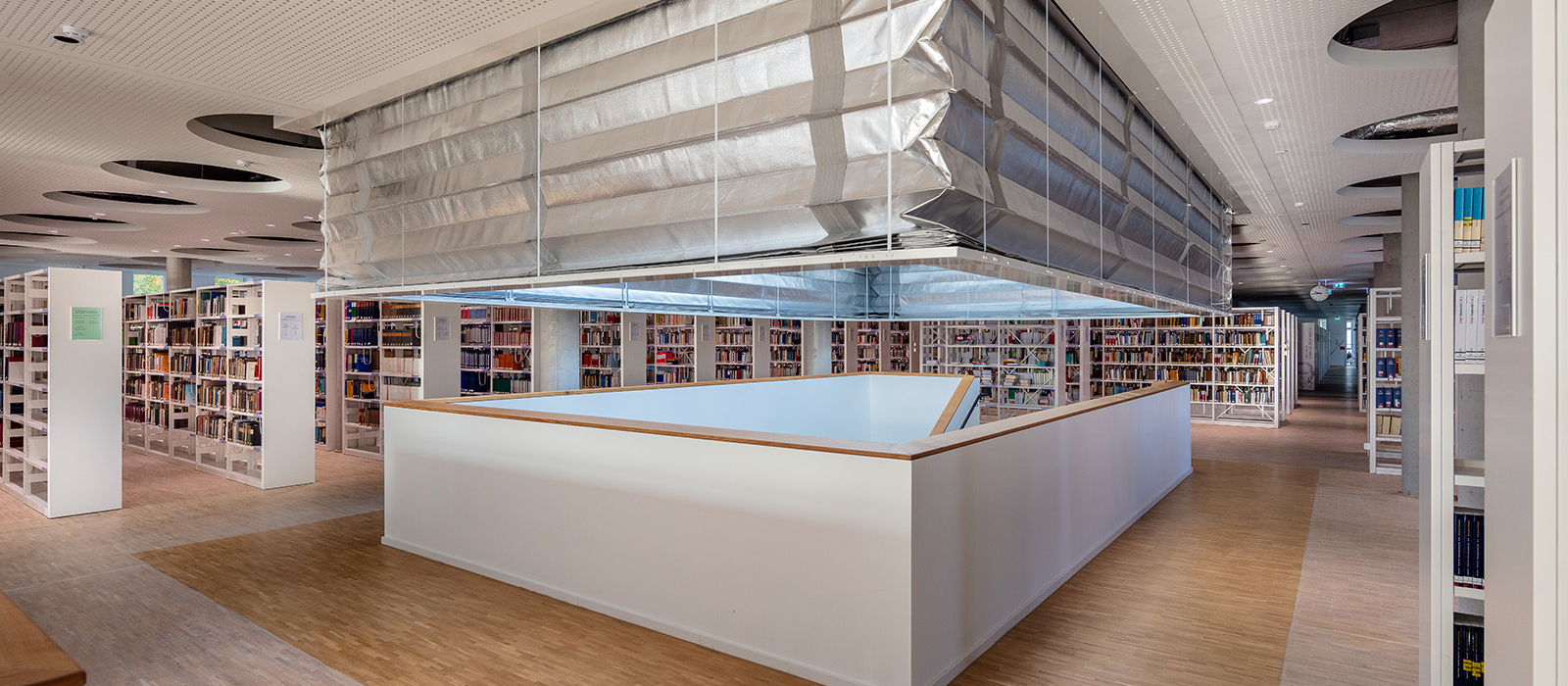
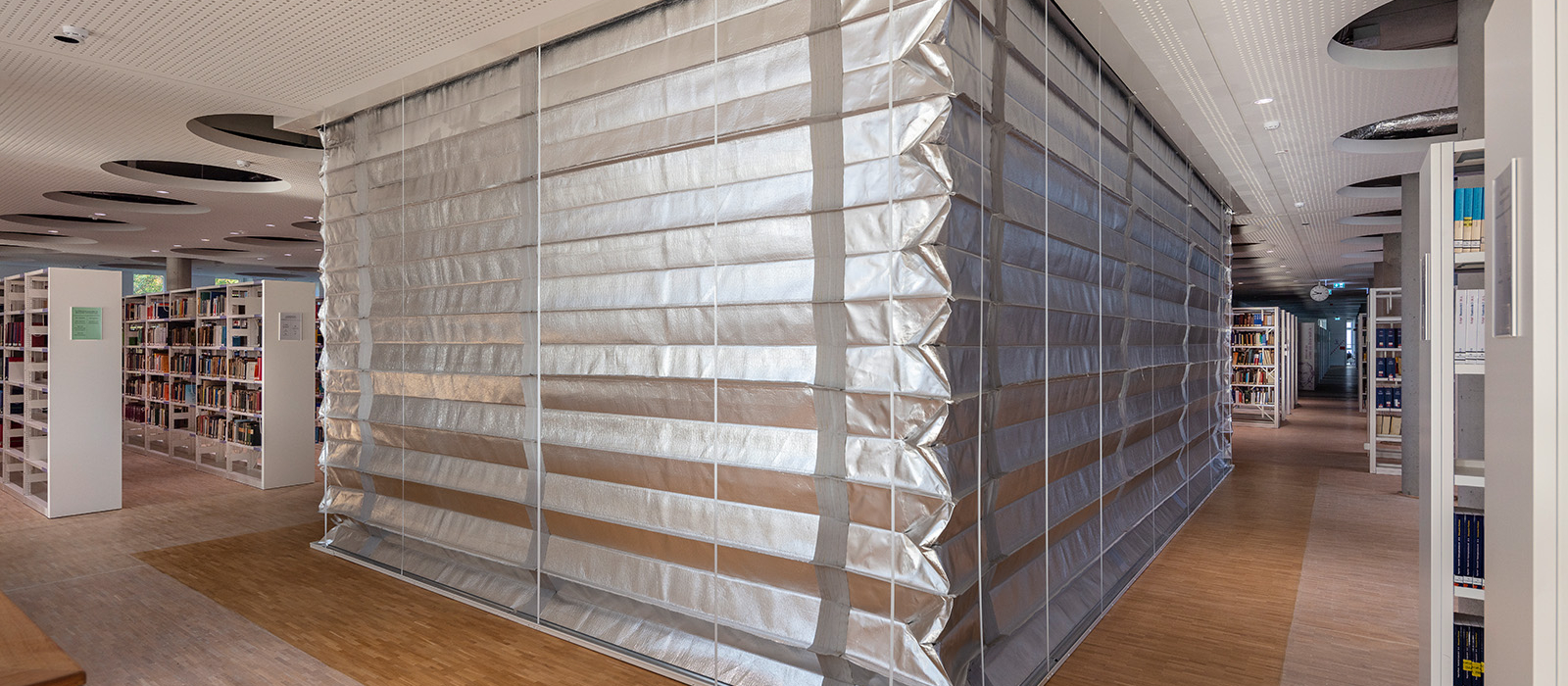
Drie verschillende STÖBICH-oplossingen werden geïnstalleerd in het Juridicum bij CAU Kiel: in de kelder van de bibliotheek, een verticaal brandwerend gordijn de trap. Fibershield®-E, het (E)conomische textiele brandwerende scherm met een hoge mate van standaardisatie, sluit zonder externe energie met het "Gravigen" aandrijfsysteem, waardoor er geen brandwerende kabels nodig zijn.
Als je een verdieping de trap op gaat, sluit de textiele brandwerende barrière de grote lichtopening naar boven - horizontaal en direct in het plafond geïnstalleerd. Dit betekent dat de Fibershield®-HC, die bij alarm met een elektromotor afsluit, ideaal is voor openingen in plafonds en geen storende ophangkabels nodig heeft in het openingsgebied.
Het sectievormende brandwerende gordijn van textiel loopt in hetzelfde trappenhuis op de bovenverdieping "om de hoek" en sluit de bovenverdieping volledig af. Ondanks de vorming van hoeken zijn er geen extra steunelementen nodig. Met de Fibershield®-S kunnen veeleisende isolatiegeometrieën worden gerealiseerd en kan tegelijkertijd meer dan 90 minuten worden voldaan aan de vereisten voor kamerafsluitingen.
DUURZAAM BOUWEN
Brandbeveiliging over verdiepingen in een duurzaam totaalconcept
Het gebouw van CAU Kiel is gebaseerd op gecertificeerde duurzaamheid, zal met 30% onder de EnEV 2014 vallen en moet de BNB-goudstatus behalen. Als onderdeel van het evaluatiesysteem Duurzaam bouwen voor federale gebouwen (BNB), de bronzen, zilveren en gouden certificaten worden toegekend op basis van de volgende toegekende beoordelingscriteria: ecologische en economische kwaliteit, sociaal-culturele en functionele kwaliteit, technische kwaliteit en proceskwaliteit.
De overeenkomstige criteria zijn van invloed op alle branches van het totaalconcept, inclusief oplossingen voor brandbeveiliging. Ook in de toekomst zal STÖBICH zijn systemen steeds meer afstemmen op deze trend naar duurzaamheid. In vergelijking met conventionele brandbeveiligingsoplossingen komt er minder CO2 vrij bij de productie van preventieve structurele brandbeveiligingssystemen van textielconstructies door het lagere gebruik van staal of plaatstaal.