Taking environmental considerations into account in fire safety
Today, tomorrow, the day after tomorrow
As an innovation-driven and manufacturing company, we recognise that product and service quality goes hand in hand with environmental protection requirements. DIN EN ISO 9001 (the internationally recognised standard for quality management systems) and DIN EN ISO 14001 (the internationally recognised standard for environmental management systems) are therefore integral parts of our business practices and philosophy.
ISO 14001 certification
STÖBICH Brandschutz has an environmental management system certified to ISO 14001. This certification confirms that our environmental management system meets the requirements of ISO 14001. As part of this management system, we systematically incorporate environmental considerations into our business processes. In doing so, we establish an organisational framework to review and further develop our environmental performance, assess our use of resources, and take applicable environmental requirements into account in our environmental management. Through measures such as improving the recycling rate, reducing energy and resource consumption, and gradually switching parts of our operational transport to electric vehicles, we are working towards specific targets to reduce selected environmental impacts of our company:
Through measures such as improving the recycling rate, reducing energy and resource consumption, and gradually switching parts of our corporate transport fleet to electric vehicles, we are working towards achieving targets to reduce selected environmental impacts of our company.
We also take selected environmental aspects into account when developing our products.
Depending on the fire safety and building design, textile fire protection solutions can offer alternatives to certain solid structural fire protection solutions, thereby opening up new design possibilities. We are breaking new ground with innovative concepts. Furthermore, we investigate materials and material alternatives in terms of their environmental impact and examine possibilities for their future use in our products.
TODAY
Making construction more sustainable
Textile fire protection systems Depending on the application, they can offer an alternative to solid wall constructions or fixed fire-resistant glazing.
They open up additional possibilities for modern and flexible building and usage concepts.
They can be retrofitted into suitable existing buildings, thereby supporting the adaptation of existing buildings to changing fire safety and usage concepts.
The system’s low weight offers advantages in terms of transport, handling and installation.
TOMORROW
Serving the trends of the building turnaround
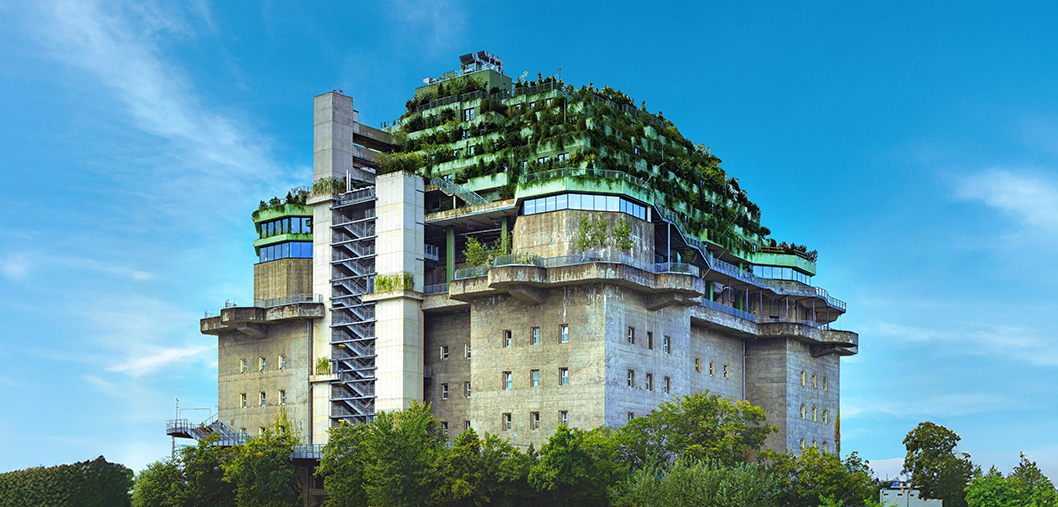
New fire protection solutions meet the complex requirements for the revitalisation of existing buildings.
They support the harmonisation of fire safety requirements and modern usage concepts whilst preserving historic building fabric.
The solutions are also designed for other applications, such as wooden buildings.
THE DAY AFTER TOMORROW
Developing new materials and product components
In research and development, we investigate alternative materials and product components.
We are investigating the use of steel variants with modified manufacturing processes and environmental impacts for future product generations.
We aim to obtain certificates of suitability for the optimised products.
We are testing new materials and alternative raw materials for their suitability for future product generations.
TEXTILE FIRE PROTECTION CAN DO MORE
Revitalization of existing buildings
We live corporate social responsibility
As a driver of innovation and a global market leader, we are mindful of our responsibility towards people and the environment, as demonstrated, amongst other things, by our certification to DIN EN ISO 14001. Together with other global players, we are also committed to the 17 UN Sustainable Development Goals of the 2030 Agenda, to which our Code of Conduct also refers. With regard to our corporate responsibility, we have adopted a voluntary Corporate Social Responsibility (CSR) framework comprising three areas of responsibility:
Our conviction
Sustainability is firmly anchored in our corporate principles, is part of our corporate strategy and is actively practised by the STÖBICH management, family and workforce.
ESG (Environment, Social and Governance) and the associated sustainability management have been brought together under a newly created staff unit since 2023.
The first steps of the ESG action plan have already been implemented, e.g. determining the STÖBICH CO2 footprint, which we will gradually reduce through various internal and external measures.
Our contribution
We take our responsibility seriously, both for society and for our employees. We are making work processes and everything surrounding them more sustainable step by step, for example by packaging our textile fire protection systems in cardboard boxes made from 80% recycled materials.
LED hall lighting, JobRad and the expansion of an e-vehicle fleet also signal the sustainable course of our corporate strategy to our employees. We are meeting the growing demand for battery safety with safety solutions for lithium-ion batteries.
Improved environmental standards for sustainable construction with textile fire protection systems and reduced use of solid, high-emission building materials, approvals and proof of usability for trends in the building transition and the planned switch to climate-friendly materials such as "green steel" are measures on our CO2 reduction path.
Our social commitment
We are committed both regionally and nationally to strengthening education, science, charitable organisations and social projects
As a sponsor of research and science, STÖBICH awards and endows prizes such as the Stöbich Entrepreneurship Doctorate Prize and the Kaiser Friedrich Research Prize.
As a sponsor, we promote regional projects, local heroes and charitable organisations, from sports clubs to festival organisers. Doing good, both on a small and large scale, has always been important to us.
"Sustainability is very important to us. We have already taken the first steps in product development, but we know that there is still a long way to go."